Bahrain Fort, also known as Qal’at al-Bahrain, is one of the most important historical and archaeological landmarks in the Arabian Gulf. Located on the northern coast of Bahrain, this UNESCO World Heritage Site is not just a fort, but a multi-layered ancient settlement that reflects thousands of years of continuous human civilization. For travelers interested in culture, archaeology, and heritage tourism, a Bahrain Fort history tour offers a deep and meaningful journey into the region’s ancient past.
Unlike modern attractions, Bahrain Fort is a place where history is not displayed in a single form. Instead, it is buried in layers—each representing different eras, civilizations, and ways of life. This makes it one of the most fascinating heritage sites in the Middle East.
The Historical Significance of Bahrain Fort
Bahrain Fort stands on top of an archaeological mound created by successive settlements over nearly 4,500 years. It is believed to have been a central location for the ancient Dilmun civilization, one of the earliest and most influential trading cultures in the region.
The Dilmun civilization played a major role in connecting trade routes between Mesopotamia, the Indus Valley, and ancient Arabian societies. Because of its strategic coastal position, Bahrain Fort became a hub for commerce, administration, and cultural exchange.
Over centuries, the site was continuously occupied and rebuilt by different civilizations, including:
- Dilmun settlers
- Mesopotamian-linked traders
- Islamic-era communities
- Portuguese occupiers
Each layer of the fort reveals a different phase of Bahrain’s long and complex history.
Why Bahrain Fort is a UNESCO World Heritage Site
Bahrain Fort has been recognized globally for its outstanding archaeological importance. It represents one of the most complete examples of an ancient tell (a man-made mound formed by continuous human settlement).
The UNESCO recognition highlights its value as:
- A major center of the ancient Dilmun civilization
- A key maritime and trade hub in early history
- A rare example of layered urban development over millennia
- A site preserving cultural continuity in the Gulf region
What makes it unique is that visitors can literally see different historical layers stacked on top of each other, showing how civilizations evolved in the same location over thousands of years.
Structure and Layout of the Fort
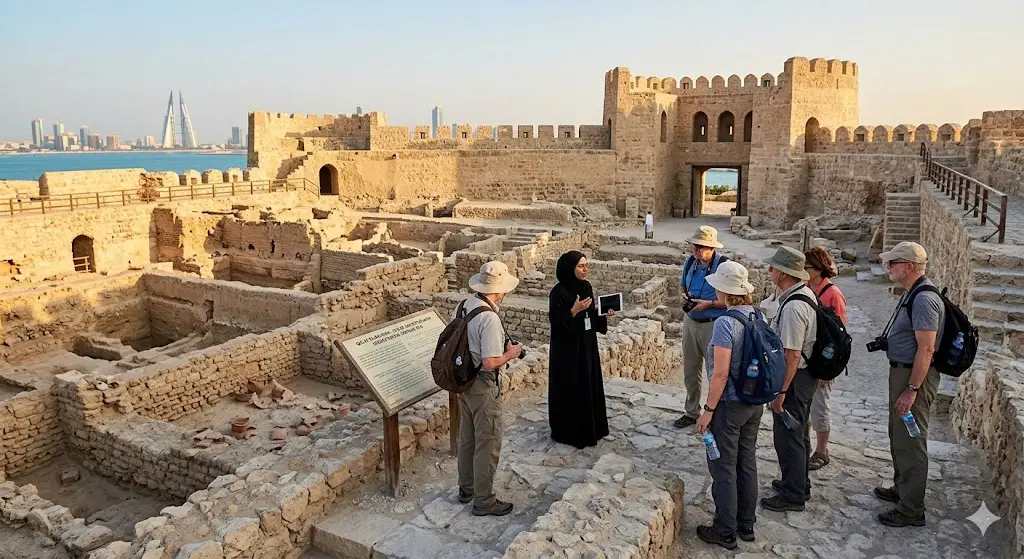
A Bahrain Fort history tour is not limited to a single structure. It is an entire archaeological landscape consisting of excavated ruins, defensive walls, residential areas, and a restored fort structure.
1) The Archaeological Mound
The main attraction is the massive mound created by ancient settlements. As visitors walk through the site, they can see exposed layers of:
- Ancient homes and rooms
- Defensive walls
- Storage areas
- Streets and pathways
- Public and administrative buildings
These layers show how people lived, built, and rebuilt over time.
2) The Fort Structure at the Top
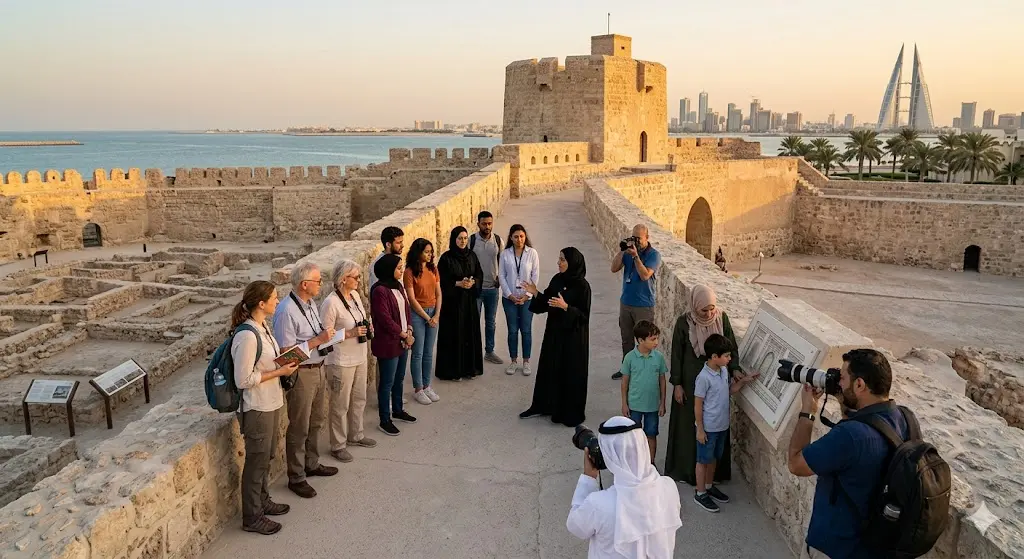
At the highest point of the site stands the restored fort, built during the later historical period. This structure served as a defensive stronghold and provides panoramic views of the surrounding coastline.
From here, visitors can see:
- The Arabian Gulf coastline
- Archaeological excavation zones
- Surrounding palm landscapes
- Sunset views over the horizon
This area is especially popular for photography and guided storytelling.
3) The Archaeological Discoveries
Excavations at Bahrain Fort have uncovered a wide range of artifacts that reflect daily life in ancient times, including:
- Pottery and ceramic vessels
- Stone tools and weapons
- Trade seals and stamps
- Coins from different eras
- Household objects
- Religious and cultural items
These discoveries help reconstruct how people lived, traded, and interacted thousands of years ago.
What to Expect on a Bahrain Fort History Tour
A guided tour of Bahrain Fort is designed to be both educational and visually engaging. Visitors are taken through different sections of the site while learning about its historical importance.
A typical experience includes:
- Walking through excavation zones
- Learning about the Dilmun civilization
- Exploring the fort’s defensive architecture
- Visiting restored sections of the structure
- Understanding trade and maritime history
- Viewing artifacts in nearby exhibition areas
The storytelling aspect of the tour is especially important, as guides explain how Bahrain evolved from an ancient trading center into a modern nation.
Growing Popularity of Heritage Tourism in Bahrain
In recent years, Bahrain Fort has become a key destination for heritage tourism. Travelers are increasingly looking for experiences that go beyond shopping malls and skyscrapers. They want to connect with history, culture, and authentic local stories.
Bahrain Fort fits perfectly into this trend because it offers:
- Real archaeological exploration
- Educational travel experiences
- UNESCO-recognized heritage value
- A peaceful and less crowded environment
- Strong cultural storytelling
This shift in travel preferences has made Bahrain Fort a must-visit destination for cultural tourists visiting the Gulf region.
Best Time to Visit Bahrain Fort
The best time to enjoy a Bahrain Fort history tour is during the cooler months, when outdoor exploration is comfortable.
Ideal visiting conditions include:
- Morning hours for soft lighting and cooler temperatures
- Late afternoon for golden sunlight and photography
- Winter season for the most pleasant weather overall
Sunset visits are especially popular because the light enhances the textures of the ancient stone structures and creates a dramatic view of the fort against the coastline.
Who Should Visit Bahrain Fort
Bahrain Fort is suitable for a wide range of travelers, especially those interested in meaningful travel experiences.
It is ideal for:
- History and archaeology enthusiasts
- Cultural travelers
- Educational groups and students
- Photographers
- Solo travelers interested in heritage
- Families exploring educational tourism
It is also a great stop for travelers exploring Bahrain as part of a Gulf itinerary.
Suggested Half-Day Heritage Tour Plan
A well-planned visit to Bahrain Fort can be completed in half a day, making it easy to include in a larger travel itinerary.
Morning Visit
- Arrival at the fort site
- Guided walk through excavation areas
- Introduction to Dilmun civilization
- Exploration of residential and public ruins
Afternoon Experience
- Visit to restored fort structure
- Museum or exhibition exploration nearby
- Learning about trade history and artifacts
- Relaxed walk through archaeological zones
Evening Option
- Sunset photography from the fort
- Coastal views and scenic exploration
- Cultural reflection and storytelling sessions
This flexible structure makes it suitable for both casual tourists and deep-history explorers.
Travel Tips for Visitors
To make the most of the Bahrain Fort experience, visitors should keep a few practical tips in mind:
- Wear comfortable walking shoes for uneven surfaces
- Carry water, especially in warmer months
- Visit with a guide for deeper historical understanding
- Allocate enough time to explore both ruins and museum areas
- Plan visits during early morning or sunset for better weather and lighting
- Combine the trip with other cultural sites in Bahrain for a fuller experience
Final Thoughts
A Bahrain Fort history tour is more than just a visit to an ancient site—it is a journey through thousands of years of human civilization. As a UNESCO World Heritage Site, it offers a rare opportunity to witness the evolution of one of the Gulf’s earliest and most important settlements.
From the ancient Dilmun civilization to later historical periods, Bahrain Fort stands as a powerful reminder of how cultures, trade, and communities evolved over time. For travelers seeking authentic heritage experiences, it remains one of the most enriching destinations in the Arabian Gulf, combining history, archaeology, and cultural storytelling in one remarkable location.