
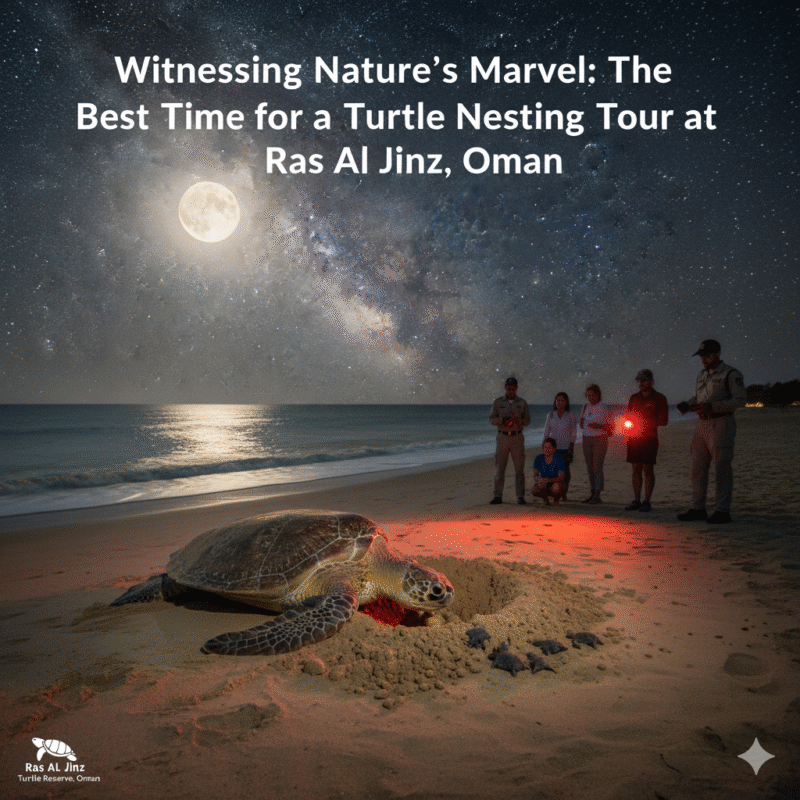
The Best Time for a Turtle Nesting Tour at Ras Al Jinz, Oman
Oman’s coastline is a sanctuary for some of the world’s most incredible wildlife, and among its natural treasures, Ras Al Jinz stands out as a global hotspot for sea turtle nesting. For wildlife enthusiasts, few experiences rival the thrill of observing these ancient creatures as they emerge from the sea to lay their eggs along the pristine beaches of this remote Omani coastal area. For anyone planning a visit, knowing the exact season and selecting an organized tour is essential for maximizing the experience while respecting the fragile ecosystem.
Introduction to Ras Al Jinz
Nestled on the easternmost tip of Oman, Ras Al Jinz is part of a protected reserve that is renowned worldwide for its green turtle (Chelonia mydas) nesting site. The area’s sandy beaches, warm coastal waters, and minimal human disturbance create the perfect environment for these turtles, which have been returning here for centuries to reproduce.
The reserve has become an international destination for conservation-minded travelers and wildlife photographers. Unlike crowded tourist attractions, Ras Al Jinz offers a tranquil and awe-inspiring natural spectacle, allowing visitors to witness one of nature’s most fascinating life cycles firsthand. Beyond the turtles, the coastal dunes, rocky outcrops, and salt flats provide a serene desert-meets-sea environment that is uniquely Omani.
Understanding the Turtle Nesting Season
The green turtles of Ras Al Jinz follow a highly specific nesting schedule dictated by seasonal changes in water temperature, tides, and daylight. Understanding this seasonal pattern is crucial for wildlife enthusiasts who want to plan their trip effectively.
- Peak Nesting Months:The primary nesting season runs from July to October, with the absolute peak typically occurring in August and September. During this period, female turtles come ashore under the cover of night to lay eggs in carefully dug nests along the sandy beaches.
- Early and Late Season:While some nesting activity begins as early as June and may extend into November, the density of turtle activity is significantly lower outside the peak months. Visiting during the height of the season increases your chances of seeing multiple turtles in a single evening.
- Nighttime Activity:Turtles are nocturnal nesters, emerging from the ocean primarily after 9:00 PM. Organized tours typically run in the evenings to align with these natural rhythms. Observing them in their natural environment requires patience, low light, and a quiet demeanor to avoid disturbing the animals.
Why an Organized Tour is Essential?
While it may be tempting to explore the beaches independently, joining an organized tour is strongly recommended for several reasons:
- Expert Guidance: Knowledgeable guides provide information about turtle behavior, nesting habits, and conservation efforts. They ensure visitors understand the ecological importance of these creatures and maintain a safe distance from the turtles.
- Responsible Viewing: Green turtles are sensitive to light, noise, and human interference. Organized tours enforce strict guidelines—such as using red-filtered lights, avoiding flash photography, and staying at a respectful distance—to prevent stress or harm to the animals.
- Enhanced Experience: Guided tours often include educational talks, visits to the on-site hatchery, and opportunities to witness both nesting turtles and recently hatched hatchlings making their way to the sea. Guides may also provide insights into the broader coastal ecosystem, including other marine life and bird species.
Tour packages usually range from evening walks to overnight stays at the reserve’s eco-lodge, combining convenience with immersive wildlife observation. Booking in advance is recommended, particularly during peak nesting months, as the tours can fill up quickly.
What to Expect During the Tour
A typical Ras Al Jinz turtle nesting tour begins in the late evening, when guides meet visitors at the reserve entrance and provide a safety briefing along with conservation guidelines. Guests are led quietly along designated paths toward the nesting beaches.
Once on the beach, visitors may witness the incredible spectacle of a female turtle laboriously hauling herself onto the sand. Using her powerful flippers, she digs a deep nest, deposits around 100 eggs, and carefully covers them with sand before returning to the ocean. This entire process can take 45 minutes to an hour, providing ample opportunity for observation and photography under guidance.
In addition to witnessing adult turtles, tours may include a visit to the hatchery, where conservationists protect eggs from predators and monitor their incubation. Depending on the season, visitors may see tiny hatchlings emerging from their nests and instinctively crawling toward the sea—a moment of pure wonder that exemplifies the resilience and beauty of nature.
Conservation and Responsible Tourism
Ras Al Jinz is not only a tourist destination—it is a protected conservation area. Visiting responsibly ensures the survival of these endangered green turtles. Tourists are encouraged to:
- Follow all guide instructions and maintain distance from turtles.
- Avoid shining bright lights or using flash photography.
- Do not touch the turtles or disturb nests.
- Respect the reserve’s quiet environment to minimize stress on wildlife.
By participating in organized tours, visitors contribute to local conservation efforts. Tour fees support habitat protection, scientific research, and educational programs that help preserve these turtles for future generations.
Planning Your Visit
For wildlife enthusiasts, careful planning enhances the Ras Al Jinz experience:
- Best Months: Plan your visit between July and October, ideally August or September, for peak nesting activity.
- Tour Booking: Reserve in advance through the official Ras Al Jinz Visitor Center or reputable eco-tourism providers. Evening tours are standard.
- Travel Logistics: Ras Al Jinz is accessible from Muscat or Sur by car or guided tour. Overnight stays at the eco-lodge provide convenience and additional observation opportunities.
- Clothing and Essentials:Wear lightweight, dark-colored clothing for camouflage, sturdy shoes for walking on sand, and carry water. Red-filtered flashlights may be permitted by guides.
Conclusion
Witnessing green turtles nesting at Ras Al Jinz is a once-in-a-lifetime experience for wildlife enthusiasts. The combination of peak nesting months (July to October), guided tours, and responsible conservation practices ensures that visitors can enjoy this natural spectacle safely and sustainably.
From observing majestic adult turtles to seeing fragile hatchlings make their journey to the sea, the experience is both humbling and exhilarating, offering a profound connection to nature and Oman’s rich coastal biodiversity. By choosing an organized tour, visitors not only gain expert insights but also contribute to the ongoing protection of these remarkable creatures.
For anyone seeking a meaningful wildlife adventure in Oman, Ras Al Jinz during the peak nesting season represents the ultimate opportunity to witness nature’s miracle in one of the country’s most pristine coastal environments. Plan carefully, respect the wildlife, and immerse yourself in an unforgettable journey of discovery.