
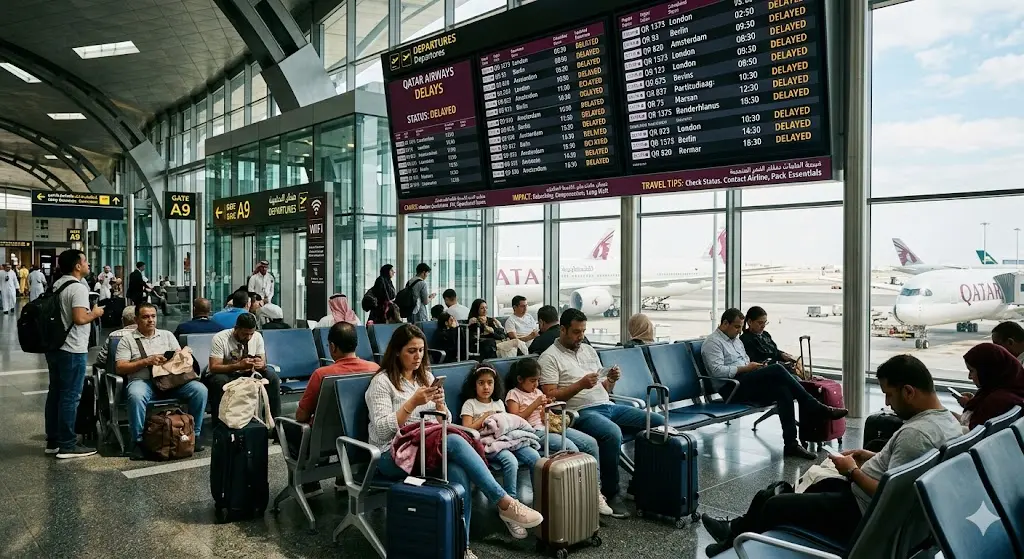
Commercial aviation is one of the most complex and interconnected industries in the world, and the Middle East has long served as a central hub in this global network. With airlines such as Qatar Airways providing vital links between Europe, Asia, Africa, and the Americas, the region is strategically positioned for international travel. However, recent regional tensions have disrupted this carefully calibrated system, creating significant delays and cancellations that affect travelers and airlines alike. These disruptions highlight how geopolitical events can quickly ripple through global aviation and impact the movement of people and goods across continents.
At the center of this disruption is Qatar, a small but strategically located country whose international airport, Hamad International Airport in Doha, has become a key connecting hub for global travel. Qatar Airways, known for its extensive network and high standards of service, finds itself navigating an unprecedented combination of political and operational challenges. These challenges not only affect the airline’s operations but also have consequences for the wider aviation ecosystem.
Strategic Location: A Double-Edged Sword
Qatar’s geographical position has long been a major advantage for international airlines. Located in the heart of the Gulf region, flights through Doha offer shorter and more efficient routes connecting Europe to Asia, Africa, and beyond. For passengers, this means reduced travel times and convenient connections. For airlines, it translates into operational efficiency and cost savings.
However, in times of geopolitical tension, the very location that makes Qatar ideal for connectivity can also become a liability. Airspace in the region can be closed or restricted rapidly due to security concerns, leaving airlines with limited options for flight paths. When these restrictions are imposed, direct routes often become impossible, and planes must take longer, less efficient paths. This not only increases flight times but also consumes more fuel and requires careful coordination with international aviation authorities.
Causes of Flight Delays
Several interrelated factors contribute to flight delays and cancellations in Qatar:
1. Restricted Airspace
The Gulf region is one of the busiest airspaces in the world. When certain areas are closed due to security concerns, airlines must reroute flights over longer and sometimes less familiar routes. Pilots must navigate approved “flight corridors,” which are determined based on safety assessments and geopolitical conditions. These reroutes can add hours to flights and disrupt schedules not only in Qatar but across global airline networks.
2. Safety Concerns
Passenger and crew safety is always the top priority. The threat of military activity or missile incidents in nearby regions means that some airspaces are considered too risky for commercial flights. Aviation authorities often approve routes only after careful assessment, and these approvals can change rapidly depending on the evolving situation on the ground. As a result, airlines are forced to delay or cancel flights at short notice.
3. Operational Challenges
Airlines face logistical hurdles when schedules are disrupted. Ground crews must handle large numbers of stranded passengers, reschedule flights, and manage aircraft that are delayed or rerouted. Maintenance schedules may also be affected, as aircraft operating on longer, alternative routes require additional inspections or fuel considerations. Crew scheduling becomes particularly complicated, as pilots and flight attendants must adhere to strict duty hours while adjusting to unforeseen delays.
4. Global Ripple Effects
Flight delays in Qatar can have far-reaching consequences. Long-haul aircraft that are delayed or rerouted may miss subsequent flights, disrupting schedules thousands of miles away. This domino effect impacts not only other Middle Eastern airlines but also international carriers that rely on connections through Doha. Cargo flights carrying essential goods may also face delays, affecting global supply chains.
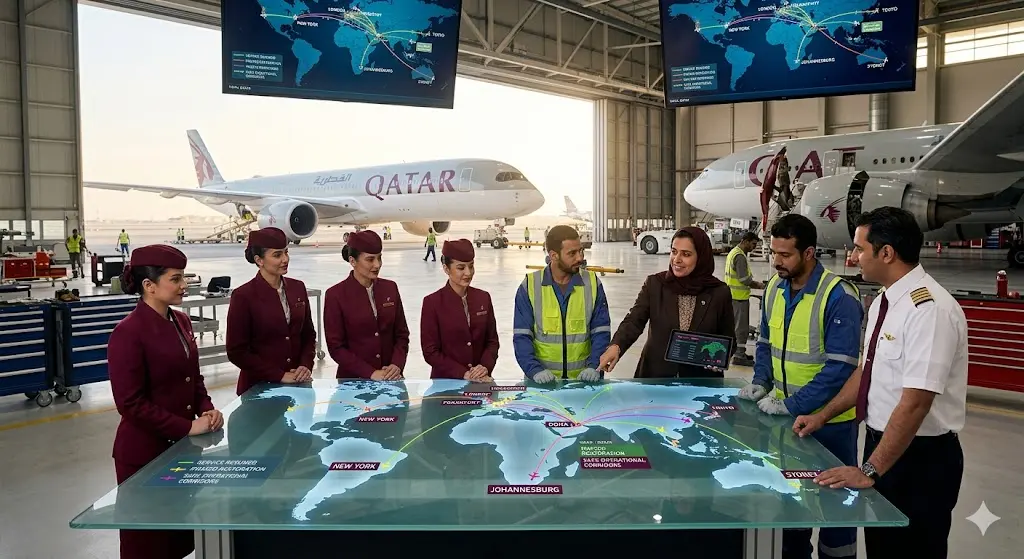
Qatar Airways’ Response to the Crisis
Qatar Airways has adopted a flexible and phased approach to restore services. The airline has gradually revised its flight schedules, prioritizing key destinations and operating through designated flight corridors that balance safety and connectivity. Passengers are being contacted with updated itineraries, and the airline emphasizes the importance of checking flight status before traveling.
The airline’s strategy reflects a broader industry norm during periods of uncertainty: phased restoration, flexible passenger management, and close coordination with government authorities. This approach allows the airline to maintain essential routes while ensuring safety and operational efficiency. Despite challenges, Qatar Airways has managed to resume service to a large portion of its destinations, demonstrating resilience in the face of geopolitical disruptions.
Broader Implications for the Middle East and Global Travel
The effects of these disruptions extend beyond Qatar. Other airlines in the Middle East, including carriers based in the United Arab Emirates, Saudi Arabia, and neighboring countries, are also adjusting schedules due to volatile airspace conditions. International airlines, such as European and Asian carriers, have similarly limited or suspended services to the region until conditions stabilize.
Beyond immediate delays and cancellations, the crisis has created several additional challenges:
- Rising Airfares: Longer flight paths and increased fuel consumption have led to higher operational costs, which are reflected in ticket prices.
- Operational Complexity: Airlines must reconsider crew rotations, aircraft utilization, and maintenance schedules to accommodate longer or alternative routes.
- Customer Support Strain: The volume of affected passengers has overwhelmed airline support channels, leading to longer wait times for assistance and rescheduling.
- Supply Chain Impacts: Cargo flights disrupted by reroutes or delays affect the movement of goods and materials globally, demonstrating how interconnected the aviation industry truly is.
Advice for Travelers
Travelers flying through Qatar or the wider Gulf region should adopt a flexible and informed approach:
- Expect Changes: Flight schedules may change at short notice due to airspace restrictions or operational considerations.
- Verify Flights Regularly: Check with your airline frequently for updates on flight status, gates, and departure times.
- Review Travel Insurance: Not all insurance policies cover disruptions caused by geopolitical events, so travelers should ensure coverage or be prepared for potential losses.
- Plan for Contingencies: Alternative routes or flexible travel dates may be necessary to reach your destination safely.
Conclusion: Navigating Turbulent Skies
Qatar flight delays due to regional tensions highlight the fragility and interconnectedness of global air travel. While airlines and aviation authorities work to maintain safety and restore services, travelers must remain patient and flexible in the face of unpredictable disruptions.
The situation also underscores the resilience of the aviation industry. Airlines are adapting operations, authorities are monitoring and securing flight corridors, and passengers are adjusting expectations to navigate a challenging environment. Although delays and cancellations are likely to persist in the short term, the gradual restoration of services demonstrates that even in turbulent times, careful planning, adaptability, and collaboration enable the skies to remain open for global travel.
In an era where geopolitical events can change the landscape overnight, understanding these disruptions helps passengers make informed decisions and appreciate the complexity of keeping the world connected through the skies.