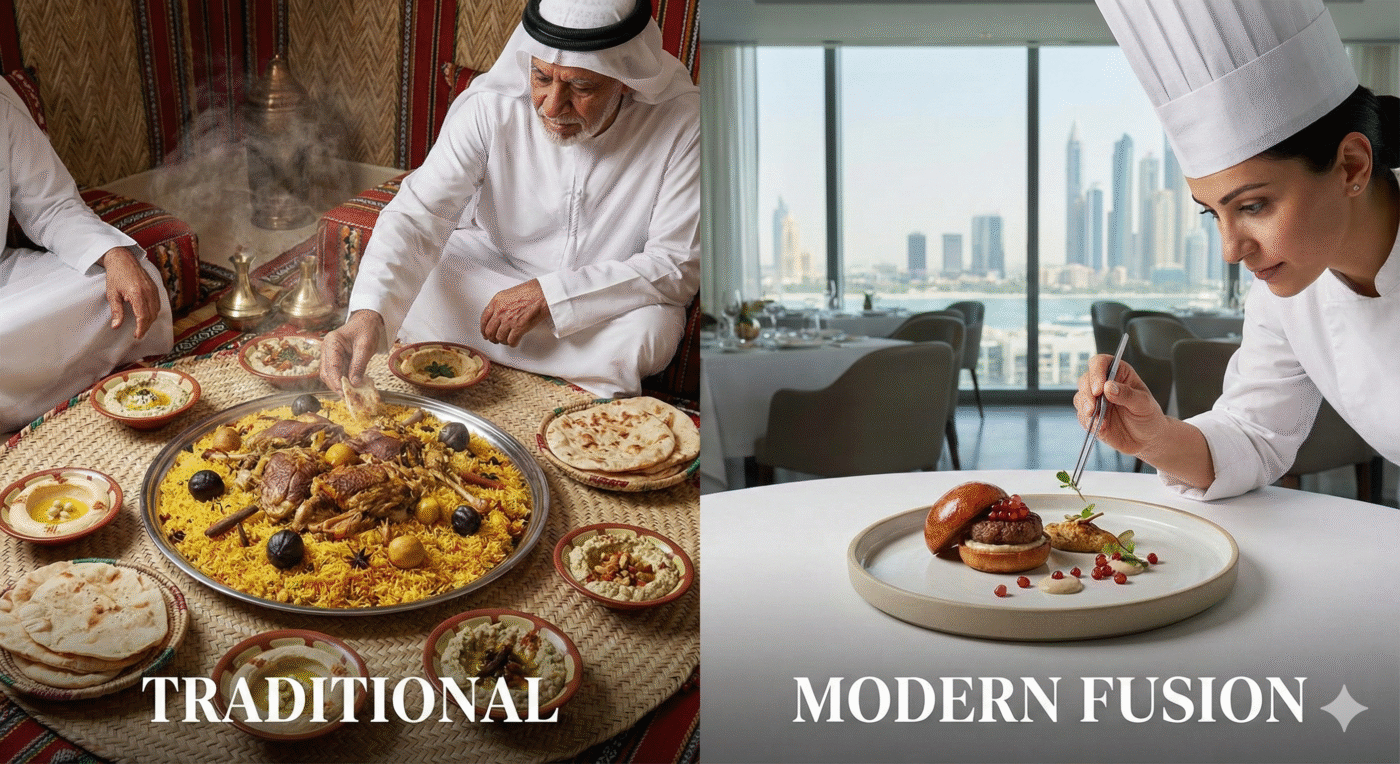
The Gulf region is a culinary wonderland where centuries-old traditions seamlessly blend with modern creativity. From the aromatic layers of Emirati machboos to inventive contemporary fusion dishes, Gulf cuisine delivers a sensory journey that goes beyond mere flavor. Each dish tells a story—of culture, history, and the region’s evolving food scene. In this guide, we explore traditional Arabic fare, modern gastronomic innovations, and the standout restaurants that make Gulf cuisine an unforgettable experience.
The Roots of Gulf Gastronomy
Gulf cuisine is shaped by geography, climate, and a rich history of trade. Coastal nations like the UAE, Oman, and Bahrain have menus dominated by seafood, while inland areas rely more heavily on rice, meat, and spices brought in through historic trading routes. Some key pillars define this culinary tradition:
-
Rice: The heart of many Gulf meals, rice is often perfumed with aromatic spices like saffron, cardamom, and cloves.
-
Meat: Lamb, goat, and chicken are frequently slow-cooked to tender perfection.
-
Spices and Herbs: Beyond typical Arabic flavors like cumin and coriander, local ingredients such as dried lime, turmeric, and sumac provide unique depth.
-
Flatbreads: Thin breads like khubz and regag are not just accompaniments—they serve as utensils for scooping up stews, dips, and grilled meats.
-
Seafood: Coastal cuisine features fish, shrimp, and lobster, prepared grilled, baked, or simmered in spiced sauces.
Gulf food is simple in its approach but layered in flavor, with every ingredient given room to shine while complemented by careful cooking techniques.
Signature Dishes of the Gulf
A true taste of Gulf cuisine comes from its iconic traditional dishes:
-
Machboos (Majboos): A spiced rice dish cooked with meat or fish, often garnished with nuts and raisins. Served during special occasions, it reflects the region’s love for aromatic flavors.
-
Harees: A comforting combination of wheat and meat, slow-cooked into a creamy, hearty dish, especially popular during Ramadan and celebrations.
-
Luqaimat: Bite-sized sweet dumplings drizzled with date syrup or honey, a festival favorite and beloved street snack.
-
Balaleet: A distinctive breakfast dish combining sweetened vermicelli with eggs and cardamom, balancing savory and sweet in one dish.
-
Ghuzi: A whole roasted lamb served atop rice with nuts and spices, typically prepared for large gatherings or festive events.
Each dish carries a narrative—from Gulf hospitality and communal dining to historical trade influences—making every meal an insight into the region’s cultural fabric.
Modern Twists on Gulf Classics
While traditional dishes remain central, Gulf chefs are pushing culinary boundaries with inventive fusion creations:.
-
Machboos Risotto: Italian risotto techniques combined with saffron and baharat-spiced rice.
-
Middle Eastern Pastries: European-style desserts enhanced with dates, cardamom, or rosewater.
-
Gulf-Inspired Burgers: Gourmet burgers featuring lamb, regional spices, and local cheeses.
These innovations appeal to both locals and international visitors, creating a vibrant culinary scene that honors tradition while embracing global influences.
Must-Visit Gulf Restaurants
Several establishments stand out for showcasing both heritage and innovation:
-
Al Fanar Restaurant & Café (Dubai, UAE): Offers authentic Emirati dishes in an environment reminiscent of 1960s Dubai.
-
Bait Al Luban (Muscat, Oman): A haven for Omani cuisine, featuring seafood machboos and slow-cooked shuwa.
-
Hakkasan (Abu Dhabi, UAE): A fine-dining spot merging Arabic flavors with contemporary Chinese cuisine.
-
Zafran Indian Bistro (Bahrain & UAE): Blends Gulf ingredients with South Asian techniques for creative fusion dishes.
-
Kargeen Caffe (Muscat, Oman): Combines traditional Omani flavors with modern presentation and gourmet twists.
These restaurants exemplify the versatility of Gulf cuisine, from comfort foods to international fine dining experiences.
Culinary Culture and Social Traditions
Food in the Gulf is not just nourishment—it is a social ritual. Meals bring families and communities together, and preparing traditional dishes is often a shared activity, with knowledge passed from elders to younger generations. Souqs and street vendors add another layer, allowing locals and travelers to engage with the cuisine in an informal, lively setting.
The rise of fusion dishes highlights the Gulf’s position as a crossroads of culture. Chefs balance global trends with local traditions, preserving culinary heritage while innovating in exciting ways.
Experiencing Gulf Cuisine Firsthand
To fully appreciate Gulf gastronomy:
-
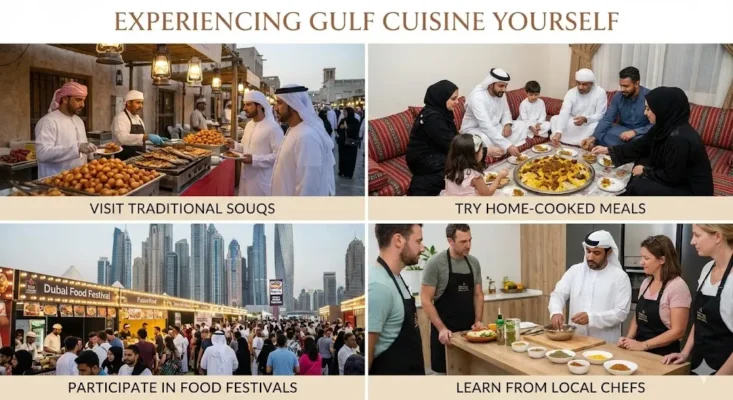
Explore Traditional Markets: Sample street foods like luqaimat or fresh seafood in bustling souqs.
-
Enjoy Home-Style Meals: Culinary tours often offer family-style meals, reflecting authentic preparation methods.
-
Attend Food Festivals: Events such as the Dubai Food Festival showcase both classic and modern dishes.
Engaging with both the traditional and contemporary sides of Gulf cuisine creates a more profound connection to the region’s culture and history.
Conclusion
Traditional dishes like machboos, harees, and luqaimat honor centuries of culinary practice, while modern fusion innovations showcase the region’s dynamic approach to food. Whether indulging in street-side sweets, savoring a luxurious seafood machboos, or enjoying a gourmet fusion meal in a high-end restaurant, Gulf gastronomy promises an unforgettable journey for the senses.
Exploring Gulf food is more than tasting—it is immersing yourself in a culture, experiencing centuries of tradition, and witnessing a vibrant culinary evolution that continues to captivate locals and travelers alike.