

The recent announcement that the United Arab Emirates (UAE) has effectively frozen visa issuance for Pakistani citizens has sent ripples of concern across Pakistan and among the country’s diaspora in the Gulf. While the move is officially framed as a measure to curb unlawful activities and maintain social order, its implications reach far beyond immigration procedures, touching on employment, economic stability, family connections, and diplomatic relations. Understanding the history, reasoning, and potential consequences of this decision is essential for both citizens and policymakers.
Historical Context and Background
Pakistanis have long had a significant presence in the Gulf region, including the UAE, Saudi Arabia, Qatar, and Oman. Millions have migrated for employment, business opportunities, and higher education. The Gulf countries, in turn, have relied heavily on the labor, skills, and contributions of expatriates to support sectors such as construction, healthcare, retail, and domestic work. Among these expatriates, Pakistanis form one of the largest communities.
Despite the largely positive contributions of Pakistani workers, recent months have seen reports of certain individuals engaging in activities deemed illegal or disruptive by host nations. These include working without proper authorization, overstaying visas, and in some instances, involvement in organized begging or criminal networks. While these incidents involve a relatively small number of people, their impact on perceptions of the Pakistani community has been significant.
Earlier in the year, Saudi Arabia deported thousands of Pakistani citizens accused of begging or violating local laws. This action set a precedent in the Gulf region, signaling that host nations would take stricter measures against illegal activities by expatriates. In this context, the UAE’s decision to freeze visa issuance for Pakistani citizens appears to be part of a broader effort by Gulf states to enforce immigration laws and maintain security and social stability.
Reasons Behind the UAE’s Decision
The UAE is known for its strict regulatory environment, which prioritizes law and order, public safety, and economic stability. Any indication of rising unlawful activity, even if committed by a minority, can prompt swift and stringent policy measures. Several factors have reportedly influenced the decision:
-
Illegal Work and Overstaying: Some Pakistanis have reportedly taken up employment without proper work permits, violating visa terms. Authorities view this as a threat to both legal labor regulations and fair employment opportunities for legal residents.
-
Rising Criminal Activities: Allegations of criminal involvement, including theft, fraud, and organized begging, have heightened scrutiny on Pakistani citizens seeking visas.
-
Identity and Documentation Concerns: Issues related to fraudulent documents, misuse of passports, and non-compliance with biometric requirements have contributed to tighter visa restrictions.
-
Perception and Diplomatic Pressures: Even if the majority of Pakistani expatriates comply with the law, the actions of a few can influence public perception and affect how host nations manage immigration policies.
The UAE’s approach appears cautious and preventive. While the freeze has affected general visa applications, it reportedly does not apply to Pakistani citizens holding diplomatic or special-purpose passports, ensuring that official travel and governmental work continue uninterrupted.
Implications for Pakistani Citizens
The freeze on UAE visas has immediate and long-term consequences for Pakistani citizens and the country’s economy:
1. Employment Disruption
The UAE is one of the primary destinations for Pakistani laborers and professionals. A freeze in visa issuance delays or cancels job placements for thousands of workers, impacting contracts, recruitment plans, and career trajectories. Professionals, domestic workers, and skilled laborers who had secured employment in the UAE may now face uncertainty.
2. Economic Impact
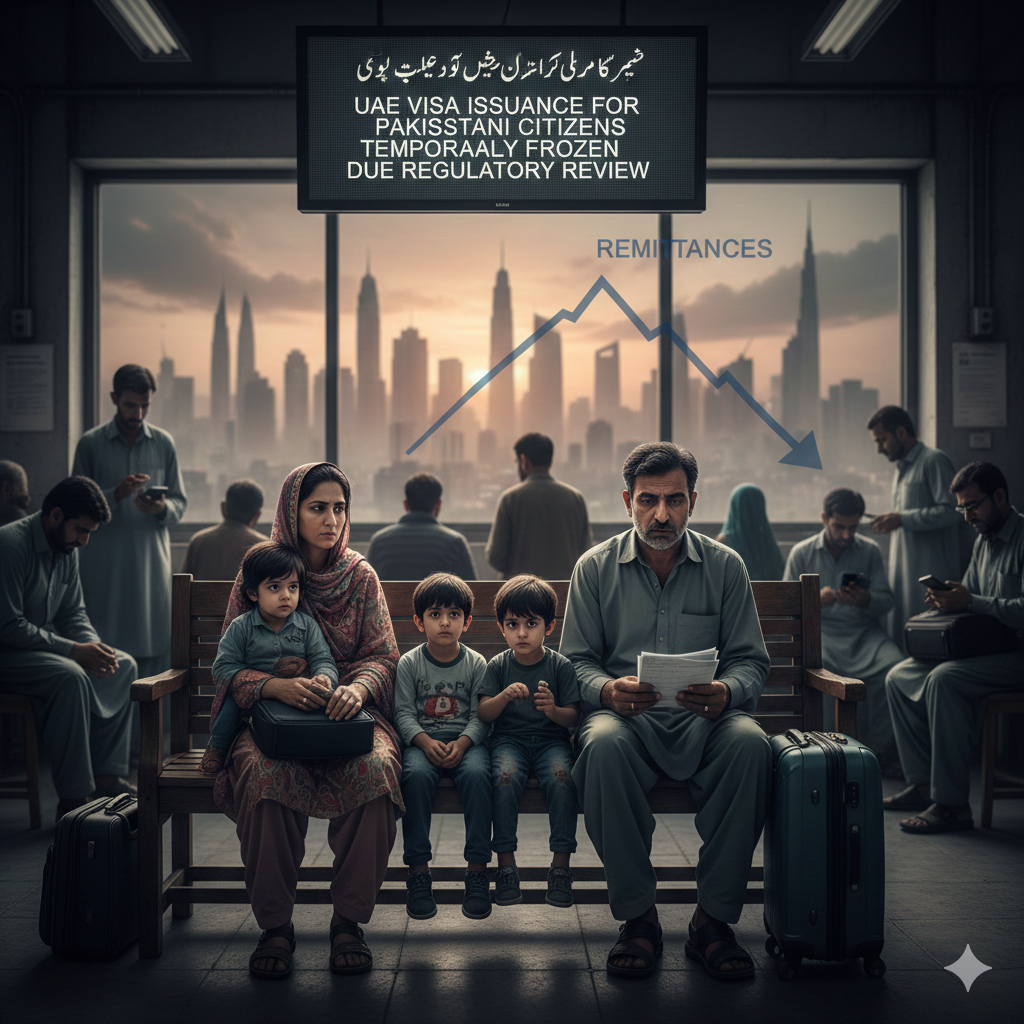
Remittances from Gulf countries, particularly the UAE, form a significant portion of Pakistan’s foreign exchange earnings. Any slowdown in labor migration directly affects remittance flows, potentially putting pressure on household incomes and national economic indicators. Families who depend on financial support from relatives abroad may experience difficulties in meeting daily needs.
3. Family Reunions Affected
Many Pakistanis travel to the UAE for family visits, education, or temporary work opportunities. The freeze disrupts plans for family reunions and creates emotional strain for those separated from loved ones. The inability to travel also affects students and professionals seeking short-term opportunities or internships.
4. Social and Psychological Impact
The uncertainty created by the freeze has caused anxiety among Pakistani citizens awaiting visas. Fear of prolonged delays or permanent restrictions adds stress, especially for those who rely on Gulf countries for employment and a better standard of living.
Diplomatic and Policy Considerations
While the freeze is currently presented as a security and regulatory measure, it also has broader diplomatic implications. Pakistani authorities must balance the need to protect their citizens’ rights abroad with maintaining positive relations with the UAE and other Gulf countries. Cooperation, compliance with immigration laws, and dialogue between governments will be critical to resolving the situation.
Possible policy responses and adjustments may include:
-
Strengthening pre-departure training and legal awareness programs for Pakistani expatriates
-
Enhancing documentation verification and ensuring adherence to visa requirements
-
Negotiating specific visa categories or quotas to allow lawful migration to resume
-
Encouraging responsible migration practices to restore confidence with Gulf authorities
Looking Ahead
There is no indication that the UAE’s freeze is permanent, but it may remain in place until authorities are satisfied that regulatory and security concerns are addressed. In the meantime, Pakistani citizens must exercise caution, follow immigration laws meticulously, and ensure that all documentation is accurate and complete.
The situation underscores the importance of responsible migration, compliance with host country laws, and proactive government engagement. By addressing the underlying issues, Pakistan and the UAE can work together to ensure that legitimate labor migration resumes smoothly and that the interests of both nations are protected.
Conclusion
The UAE’s decision to freeze visas for Pakistani citizens serves as a reminder that the actions of a few individuals can have wide-reaching consequences for an entire community. While it presents immediate challenges for employment, family reunions, and economic stability, it also highlights the need for responsible migration and effective diplomatic engagement.
With careful planning, compliance with host country regulations, and sustained dialogue between Pakistan and the UAE, it is possible to restore visa issuance and ensure safe, lawful, and productive migration for Pakistani citizens in the future.