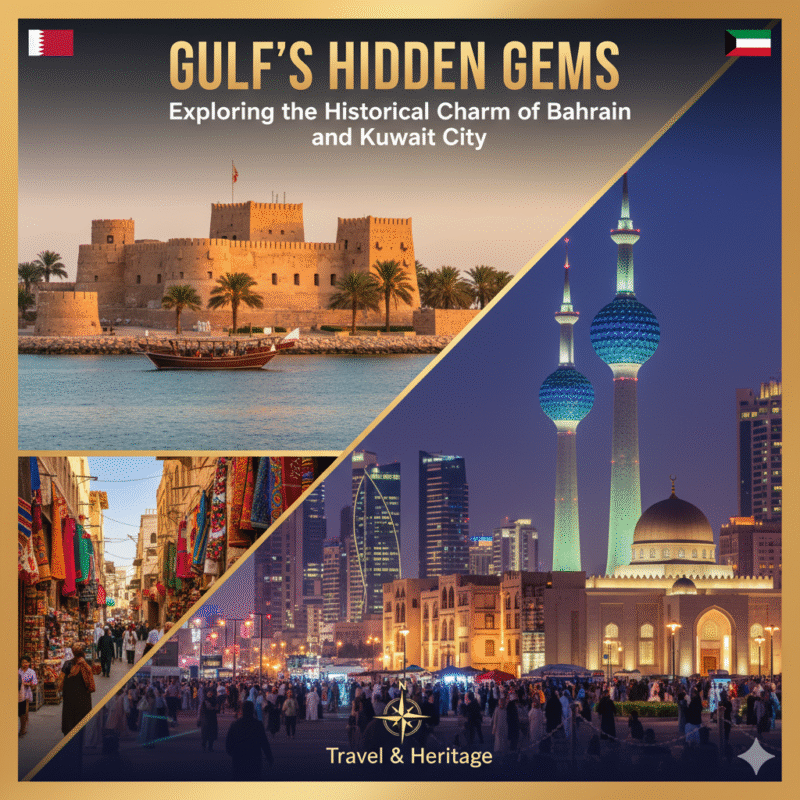
Exploring the Historical Charm of Bahrain and Kuwait City
When most travelers think of Gulf tourism, shimmering skyscrapers, mega-malls, and futuristic skylines usually take center stage. Yet tucked behind the modern façades of the region are countries with deep cultural roots and centuries-old traditions. Bahrain and Kuwait City, two often-overlooked destinations, offer an intimate look into the Gulf’s soul—its markets, its stories, its neighborhoods, and its history shaped by pearl divers, merchants, poets, and fishermen.
This guide uncovers ten hidden gems—five in each destination—that go far beyond the expected tourist path. These places offer authenticity, warmth, and a strong sense of heritage for travelers eager to explore a different side of the Middle East.
BAHRAIN: Where Ancient Trade Routes Meet Island Serenity
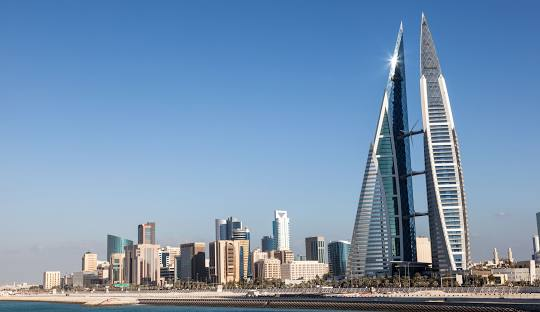
Bahrain, an archipelago of 33 islands, has been a crossroads of civilizations for thousands of years. While the country is known for its financial hub and Formula 1 circuit, its cultural treasures lie in quiet alleyways, seaside villages, and centuries-old ruins.
-
Muharraq’s Pearling Path – Walking Through Bahrain’s Old Soul
Why It Captivates
Walking along the Pearling Path feels like stepping into a beautifully preserved time capsule. Once the heart of the island’s booming pearl trade, Muharraq’s narrow lanes still echo with stories of divers, merchants, and craftsmen.
Historical Significance
This UNESCO World Heritage site traces the journey of Bahrain’s pearl industry—once considered the finest in the world. Historic houses belonging to renowned pearl traders stand along the route, each restored with remarkable detail.
Travel Tips
- Best time to visit: November–March for cooler weather.
- How to get there: A short drive from Manama; parking options near Muharraq Souq.
- Etiquette: Dress modestly and speak softly in residential areas.
Local Experiences Not to Miss
Stop at a traditional café for sweet saffron tea and mahiyawa bread, a coastal specialty locals swear tastes better in Muharraq.
-
Bu Maher Fort – A Coastal Gateway to History
Why It Captivates
Accessible only by a short boat ride, Bu Maher Fort feels like a secret outpost guarding Bahrain’s maritime past.
Historical Significance
Built in 1840, the fort once served as a crucial checkpoint for traders entering Bahrain. Today, its exhibits narrate the island’s long maritime history, from fishing dhows to pearling fleets.
Travel Tips
- Tours depart from the Pearling Path Visitors Center.
- Go early morning to avoid humidity and enjoy clear coastal views.
- Wear comfortable shoes for walking the sandy grounds.
Food Recommendation
After returning, try balaleet, a sweet-and-savory vermicelli breakfast the boat guides often recommend.
- A’ali Pottery Village – Where Clay Meets Craftsmanship
Why It Captivates
The rhythmic tapping of potters shaping clay in A’ali village creates a soothing soundtrack to one of Bahrain’s oldest crafts.
Historical Significance
Pottery in Bahrain dates back over 4,000 years to the Dilmun civilization. The village remains one of the few places in the Gulf where artisans still use age-old techniques.
Travel Tips
- Best time: Late afternoon when workshops are most active.
- Customs: Ask before photographing artisans—it’s polite and appreciated.
- What to buy: Handcrafted incense burners or decorative clay pots.
Local Experience
Sip Arabic coffee offered by the workshop owners—an act of hospitality that often comes with stories about the clay pits that once supplied pottery for the entire Gulf.
-
Saar Archaeological Site – Echoes of Dilmun Civilization
Why It Captivates
Situated in a quiet neighborhood, Saar offers a peaceful and immersive walk among ancient ruins.
Historical Significance
These remnants of the Dilmun era—houses, temples, burial mounds—bring to life a sophisticated Bronze Age settlement. Local archaeologists often describe Saar as “Bahrain’s silent storyteller.”
Travel Tips
- Wear hats and sunscreen; the site has minimal shade.
- Ideal for photography lovers, especially during golden hour.
- Respect barriers to protect the fragile ruins.
Nearby Culinary Delight
Visit a local restaurant for ghozi, a slow-roasted lamb dish cherished during celebrations.
-
Manama’s Bab Al-Bahrain Market – A Cultural Mosaic
Why It Captivates
While not completely unknown, Bab Al-Bahrain Souq holds hidden alleys and quiet corners often missed by casual visitors.
Historical Significance
Built in 1949, Bab Al-Bahrain once stood at the water’s edge before land reclamation reshaped the coastline. It served as a symbol of the kingdom’s trade and communal life.
Travel Tips
- Allocate at least two hours to explore.
- Bargaining is respected but keep it friendly.
- Fridays are lively with families, musicians, and street vendors.
Don’t Miss
Try halwa Bahraini, a gelatinous dessert flavored with saffron and rosewater that vendors proudly prepare in huge copper pots.
KUWAIT CITY: A Blend of Maritime Heritage & Urban Heritage
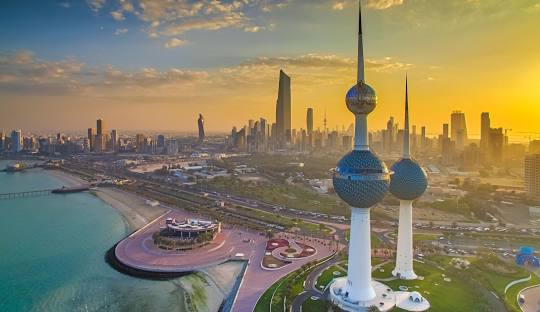
Kuwait City is an intriguing mix of modernity and nostalgia. Beyond its shimmering skyline lies a wealth of cultural treasures shaped by seafarers, storytellers, pearl merchants, and long-standing Bedouin traditions.
-
Al Mubarakiya Market – Kuwait’s Beating Historical Heart
Why It Captivates
Souq Al Mubarakiya is one of the oldest markets in the Gulf. Its spice-filled air and vintage storefronts make it a sensory feast.
Historical Significance
Once the commercial center before the oil boom, this bustling souq was where Kuwaitis shopped for pearls, textiles, and essentials. Many elderly shopkeepers still recount stories of traders arriving by dhow.
Travel Tips
- Best visited in the evening when the souq comes alive.
- Wear comfortable shoes—there’s a lot to explore.
- Photography is welcomed but ask before shooting vendors.
Food Recommendation
Try margoug, a hearty stew served in traditional eateries hidden in back alleys.
- Sadu House – A Tapestry of Bedouin Identity
Why It Captivates
Located near Kuwait National Museum, Sadu House is a beautifully restored structure dedicated to preserving Bedouin weaving traditions.
Historical Significance
For centuries, Bedouins wove camel and goat hair into textiles used for tents, rugs, and saddlebags. These geometric designs are more than art—they’re a symbolic language.
Travel Tips
- Attend one of their weaving workshops or exhibitions.
- Modest clothing recommended.
- Purchase handmade pouches or rugs to support the artisans.
Local Story
A weaver once shared: “Every thread tells where we come from—the desert remembers us.”
-
Failaka Island – Where Ancient Civilizations Meet Modern Memory
Why It Captivates
A short boat ride from Kuwait City, Failaka Island offers a rare blend of history and abandoned modern structures, making it a haunting yet fascinating destination.
Historical Significance
The island contains settlements dating back to the Bronze Age. It is also linked to Greek civilization during Alexander the Great’s era. More recently, Failaka holds memories of the Gulf War, visible in its deserted buildings.
Travel Tips
- Visit during cooler months.
- Guided tours are recommended due to limited infrastructure.
- Carry water and sun protection.
Island Treat
If available, enjoy fresh seafood grilled by local fishermen—it’s as authentic as it gets.
-
Youm Al Bahar Village – Kuwait’s Maritime Heritage Preserved
Why It Captivates
This charming open-air museum recreates life in Kuwait before oil transformed the country.
Historical Significance
The village celebrates traditional livelihoods—pearl diving, boat building, fishing—and honors Kuwait’s maritime roots. Many structures were built using original techniques.
Travel Tips
- Weekends often include folk performances.
- Ideal for families with kids.
- Respect cultural etiquette and avoid touching artifacts unless allowed.
Food Recommendation
Enjoy fresh zubaidi fish, Kuwait’s national favorite, cooked the traditional way.
-
Bahra Modern Art Center – A Quiet Haven for Contemporary Creatives
Why It Captivates
Far from typical tourist spots, Bahra Art Center in an industrial corner of Kuwait City showcases rising local artists exploring identity, heritage, and modernity.
Historical Significance
Although contemporary, the center gives voice to young Kuwaitis navigating cultural change. Many pieces incorporate old photographs, maritime symbols, or Bedouin motifs.
Travel Tips
- Check exhibition schedules in advance.
- Dress casually and enjoy conversations with resident artists.
- Photography is usually allowed unless specified.
Café to Try
The center’s minimalist café serves cardamom-infused iced coffee, blending tradition with modern taste.
Final Reflections: Rediscovering Authentic Gulf Culture
Bahrain and Kuwait City may not always be the first choices for travelers heading to the Gulf, but that’s precisely their charm. Their cultural sites, artisan workshops, archaeological ruins, and living heritage reveal stories that glitzy attractions can’t match. Whether you’re wandering through Muharraq’s pearling lanes or listening to Bedouin weaving tales in Sadu House, you’ll discover a region rich in memory and meaning.
These two nations invite travelers not just to visit—but to return, reconnect, and rediscover the layers of history that make the Gulf such an extraordinary place.