
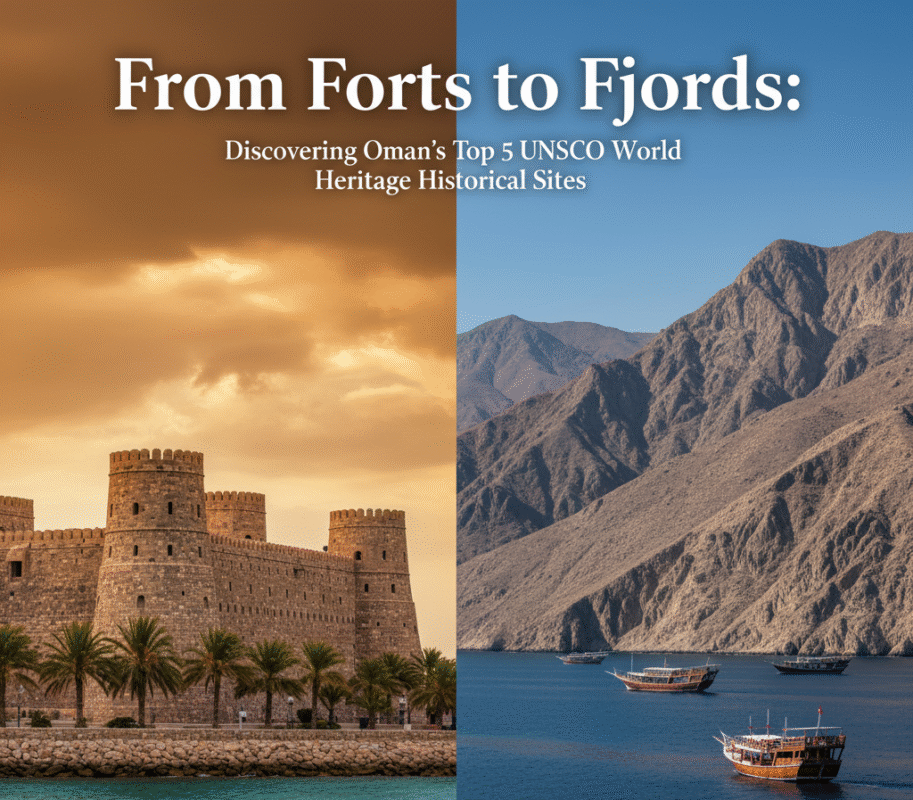
Discovering Oman’s Top 5 UNESCO World Heritage Historical Sites
Oman is one of the Arabian Peninsula’s most captivating countries, offering a blend of dramatic landscapes, deep-rooted traditions, and remarkably preserved historical sites. For European travelers seeking cultural depth, quiet authenticity, and archaeological richness, Oman stands out as a destination where history is neither staged nor overshadowed by modern development. Instead, its forts, ancient settlements, and rugged fjord-like coastlines reflect a heritage shaped by frankincense caravans, maritime trade networks, and centuries of cross-cultural exchange.
Among the many historical treasures scattered across the country, five UNESCO World Heritage Sites represent the best window into Oman’s past. This guide provides a clear and practical overview of each site, with insights and tips tailored for travelers exploring Oman for the first time.
-
Bahla Fort: A Monument of Omani Defensive Architecture
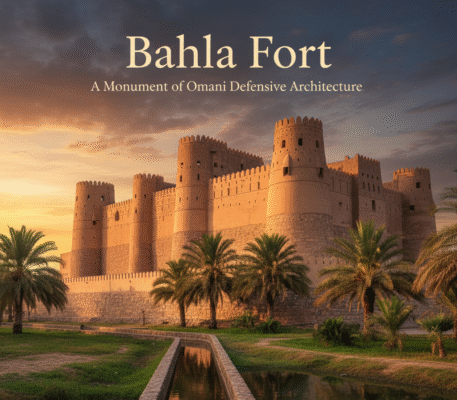
Bahla Fort is one of Oman’s most striking defensive structures and a masterpiece of mud-brick engineering. Sitting at the edge of the Hajar Mountains, this massive fortification once protected a prosperous oasis settlement known for date farming and pottery production.
Why It Matters
Bahla Fort reflects the influence of the Banu Nabhan, a powerful tribe that controlled trade routes across the interior for several centuries. The fort’s sprawling walls, watchtowers, and courtyard systems show how Omani communities organized their defense and administration long before modern statehood.
What to Expect
Visitors can explore restored corridors, inner rooms, and elevated walkways offering panoramic views of Bahla’s palm groves. The surrounding old town, with its traditional mud houses, adds another layer of historical interest.
Practical Tip
Combine a visit to Bahla with nearby Jabrin Castle and the village of Misfat al Abriyeen for a full day of heritage and mountain scenery.
Archaeological Sites of Bat, Al-Khutm, and Al-Ayn: Oman’s Bronze Age Legacy
These interconnected prehistoric settlements make up one of the most complete collections of third-millennium BCE tombs and towers in the world. For travelers interested in early human societies, this UNESCO site offers an unusually intact view of ancient Arabian life.
Why It Matters
The beehive-shaped tombs and circular stone towers demonstrate advanced engineering for the period and highlight the region’s role in Bronze Age trade networks. They also challenge the common assumption that the region was sparsely populated in early history.
What to Expect
The tombs at Al-Ayn are especially impressive due to their dramatic setting along a ridge overlooking the plains. The site is quiet, atmospheric, and ideal for photography in early morning or late afternoon light.
Practical Tip
The area is remote, and a rental car or private guide is advisable. Bring water and sturdy shoes, as the terrain is rocky.
-
Land of Frankincense: Caravan Trails and Coastal Ports
This UNESCO site encompasses multiple locations in the Dhofar region, including the ancient port of Khor Rori (Sumhuram), the caravan oasis of Shisr (Ubar), and the natural groves of frankincense trees in Wadi Dawkah.
Why It Matters
For centuries, frankincense was one of the world’s most valuable commodities. Dhofar was the heart of production, supplying the Mediterranean, the Arabian Peninsula, and parts of Asia. These sites show the full economic chain, from cultivation to export.
What to Expect
Khor Rori offers atmospheric ruins overlooking a coastal lagoon. Wadi Dawkah is a natural reserve of Boswellia trees, still producing resin today. Ubar, often referred to in local tradition as the “Atlantis of the Sands,” features archaeological remains linked to ancient trade caravans.
Practical Tip
The region is best explored from Salalah, which also has green seasonal landscapes during the monsoon period known as the Khareef.
-
The Aflaj Irrigation Systems: Engineering Ingenuity Across the Desert
The Aflaj (plural of falaj) represent Oman’s ancient irrigation technology, used to transport water from underground sources or mountain springs to agricultural villages. Several of these systems, including Falaj Daris and Falaj Al-Malki, are UNESCO-listed for their historical significance.
Why It Matters
These channels illustrate how Omani communities adapted to an arid environment long before mechanical pumps existed. The falaj system also shaped settlement patterns, social cooperation, and agricultural practices still in use today.
What to Expect
Some aflaj run beneath old towns, while others flow through open channels shaded by date palms. Nizwa and Ad Dakhiliyah region are excellent areas to see them in operation.
Practical Tip
To understand the system clearly, visit an aflaj early in the morning when water levels are highest and farmers tend to be active around the fields.
-
Qalhat: A Forgotten Coastal Powerhouse
Once a vibrant Indian Ocean trading hub, Qalhat was a key port between the thirteenth and fifteenth centuries. The most visible structure today is Bibi Maryam’s Mausoleum, the remains of a notable monument linked to the city’s golden age.
Why It Matters
Qalhat reflects Oman’s historic maritime connections with East Africa, India, and Persia. It was once significant enough to be mentioned by Marco Polo and Ibn Battuta, making it an important reference point for medieval travel and trade histories.
What to Expect
The site consists of stone ruins spread across a coastal plateau. While much of the city was damaged by earthquakes, its layout remains discernible, and the location offers wide views of the Arabian Sea.
Practical Tip
Qalhat is located near Sur, allowing visitors to combine the site with nearby coastal attractions such as Ras Al Jinz turtle reserve.
Conclusion
Oman’s UNESCO World Heritage Sites reveal an intricate story of human adaptation, trade, craftsmanship, and cultural continuity. From Bronze Age tombs and vast forts to ancient ports and desert irrigation systems, these places offer a unique perspective that appeals strongly to travelers seeking authenticity and historical depth. For Europeans looking to explore a region where tradition remains visible and landscapes remain unspoiled, Oman provides a rewarding and accessible journey into the past.
If you’d like, I can also create a shorter version, an SEO-optimized version, or a travel itinerary based on these sites.