Is Saudi Arabia Safe for American and European Tourists in 2026?
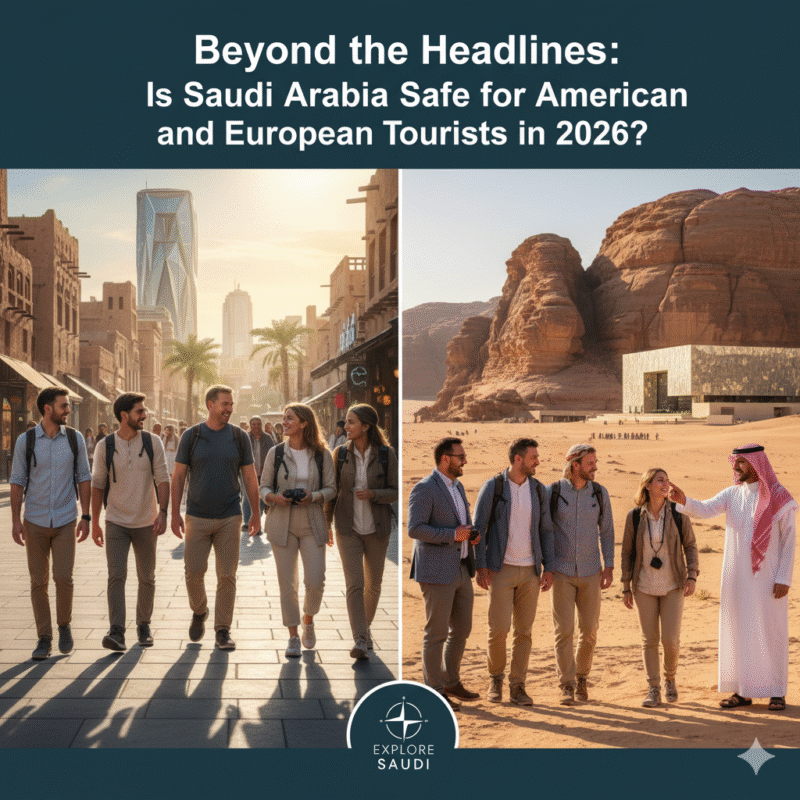
Saudi Arabia is one of the most talked-about new destinations in global tourism. After decades of being closed to leisure visitors, the kingdom launched its international tourism visa in 2019, opening the door to travelers from the United States, Europe, and beyond. Since then, millions have visited its archaeological sites, Red Sea coastlines, modern cities, and cultural festivals. Yet the most common question from Western travelers remains straightforward: Is Saudi Arabia safe to visit in 2026?
The perception of Saudi Arabia in the West is often influenced by political news, outdated information, or assumptions based on regional instability. But safety on the ground for tourists is a different story. This in-depth guide looks beyond headlines and provides a clear, realistic, and practical assessment for Americans and Europeans considering a trip in 2026.
Why Do Western Travelers Question Safety in Saudi Arabia?
For many Americans and Europeans, Saudi Arabia remains relatively unfamiliar as a tourist destination. Media coverage has historically focused on political developments rather than daily life. This creates a perception gap between the image of Saudi Arabia abroad and the actual experience travelers have when visiting.
Several factors feed into this uncertainty:
- Limited tourism history compared to neighbors like the UAE
- Headlines related to regional conflicts in the Middle East
- Concerns about cultural differences or social norms
- Misconceptions about crime and public safety
This makes it reasonable for travelers to seek trustworthy, practical information before booking flights. The good news is that Saudi Arabia has put substantial effort into ensuring a safe, organized, and visitor-friendly environment.
So, Is Saudi Arabia Safe for American and European Tourists in 2026?
The short answer is yes. For tourists staying in major cities, heritage sites, or designated tourism zones, Saudi Arabia is generally very safe. Violent crime rates are low, tourism infrastructure continues to improve rapidly, and security services closely monitor public spaces.
However, safety does not mean sameness. Saudi Arabia is culturally conservative, and travelers must understand and respect local norms to ensure a smooth experience. But within those expectations, Western tourists typically find the country orderly, secure, and surprisingly welcoming.
-
What Is the Actual Crime Situation in Saudi Arabia?
Compared to global tourism hubs, Saudi Arabia has one of the lowest crime rates affecting visitors. The kingdom enforces strict laws, and social norms encourage respect for personal property and public order.
Visitors typically report:
- Very low levels of pickpocketing or theft
- Safe walking conditions in most urban areas
- High security presence in tourist zones, malls, and transport hubs
- Well-regulated hotels and upscale districts
Many travelers note that they feel safer walking around Riyadh or Jeddah at night than in many major European or American cities.
This does not mean crime never occurs, but incidents involving tourists are rare and usually minor.
-
Are There Areas That Tourists Should Avoid?
Most of Saudi Arabia is stable and accessible, but not every region is suitable for tourism.
Generally safe and prepared for international visitors:
- Riyadh
- Jeddah
- AlUla
- Diriyah
- The Red Sea Project areas
- NEOM regions open to the public
- Taif
- Abha and Asir
- Medina (non-Muslims can visit parts of the city)
Areas travelers should avoid:
- Border zones near Yemen
- Remote areas along the south-western frontier
- Certain industrial zones or oil production facilities
These restricted areas are not part of ordinary itineraries. Western governments consistently advise avoiding the Yemen border due to conflict spillover, and Saudi authorities also restrict access.
-
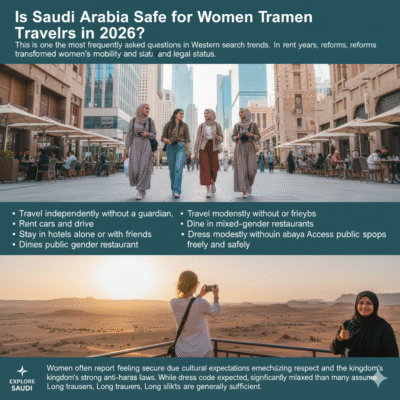
Is Saudi Arabia Safe for Women Travelers in 2026?
This is one of the most frequently asked questions in Western search trends. The answer is yes, with context.
In recent years, reforms have transformed women’s mobility and legal status. Female visitors can:
- Travel independently without a guardian
- Rent cars and drive
- Stay in hotels alone or with friends
- Dine in mixed-gender restaurants
- Dress modestly without needing an abaya
- Access public spaces freely and safely
Women often report feeling secure due to cultural expectations emphasizing respect and the kingdom’s strong anti-harassment laws.
While modest clothing is expected, the dress code is significantly more relaxed than many assume. Long trousers, long skirts, and loose tops are generally sufficient.
-
How Safe Is Saudi Arabia for Solo Travelers?
Solo travelers—both men and women—regularly visit Saudi Arabia with positive experiences. Locals often extend assistance to foreigners, whether helping with directions, understanding cultural etiquette, or navigating transportation.
Solo travelers should still exercise standard caution, as they would anywhere, but there are no specific safety risks targeting individuals traveling alone.
-
What About Cultural Norms and Legal Expectations?
Saudi Arabia’s legal and cultural environment differs from Western countries, and understanding these expectations is important for comfort and safety.
Key guidelines include:
- Alcohol is prohibited
- Public displays of affection should be avoided
- Public criticism of cultural or religious values is inappropriate
- Modest clothing is expected in public places
- Religious sites in Mecca and central Medina are restricted to Muslims
These guidelines may feel unfamiliar to some Western travelers, but they are straightforward and easy to follow. Tourists who respect the cultural framework rarely encounter problems.
-
How Strong Is Saudi Arabia’s Security Infrastructure?
Security in Saudi Arabia is organized, visible, and technologically advanced. Surveillance systems are present in most public areas, and emergency services are widely accessible.
Travelers will notice:
- Police patrols in busy districts
- Security checks at malls and museums
- Airport-style screening at large events
- Well-regulated hotel security systems
- Quick response services for emergencies
These measures are not designed to intimidate but to maintain an orderly environment, particularly as tourism grows.
-
What About Transportation Safety?
Transport safety has improved significantly as part of Vision 2030.
Taxis and Ride-Hailing:
Uber, Careem, and licensed taxis operate widely, offering convenient and safe travel.
Driving:
Road quality is high, but local drivers may drive aggressively. Many Western tourists prefer using ride-hailing apps for intercity travel.
Public Transport:
Riyadh’s metro network, opening in phases, provides safe and efficient urban mobility. Jeddah and Medina offer improved bus systems as well.
Airports:
Saudi airports meet international security standards, and new terminals continue to open ahead of major tourism projects.
- Health, Climate, and Environmental Safety
Saudi Arabia maintains strong health standards. Major cities have international hospitals, and emergency medical care is accessible.
Environmental considerations include:
- Extreme heat from May to September
- Cooler, pleasant temperatures from November to March
- Desert conditions requiring hydration and sun protection
- Occasional sandstorms that may affect visibility
Travelers should prepare for the climate, but no unusual health risks exist beyond standard precautions.
Looking Ahead: Why 2026 Is a Pivotal Year
By 2026, many flagship Vision 2030 tourism projects will be completed or operational, including:
- New Red Sea luxury resorts
- Expanded heritage sites in AlUla
- More international events in Riyadh
- Improved hospitality standards
- Wider visa-free or fast-visa entry options
These developments make the country even more accessible and structured for Western tourism.
Conclusion: Should Americans and Europeans Feel Safe Traveling to Saudi Arabia in 2026?
Yes. For the majority of travelers, Saudi Arabia is a safe and well-organized destination. While cultural norms differ from those in the United States or Europe, visitors who respect local expectations typically enjoy a secure and enriching experience.
The country combines low crime, strong security, extensive tourism investment, and a growing international presence. The main barrier remains perception, not reality.
For travelers seeking archaeological depth, modern cities, desert landscapes, and new cultural experiences, Saudi Arabia in 2026 offers a safe and intriguing destination worth serious consideration.