
History and Architecture of Sultan Qaboos Grand Mosque in Muscat
In the heart of Muscat, surrounded by palm trees and mountains, rises a structure that embodies Oman’s cultural pride and spiritual devotion—the Sultan Qaboos Grand Mosque. More than a place of worship, this landmark is a masterpiece of modern Islamic architecture, blending timeless tradition with contemporary design. Since its inauguration, it has become not only a center for prayer but also a symbol of Oman’s identity on the global stage.
The Vision Behind the Mosque
The mosque was the dream project of His Majesty Sultan Qaboos bin Said, Oman’s beloved leader, who envisioned a grand religious center that reflected the nation’s Islamic values, heritage, and hospitality. In 1992, a nationwide competition was announced to select the best design, and construction began in 1994. After nearly six years of meticulous work, the mosque was officially opened in 2001.
The mosque’s creation was not merely about building a monument. It was a statement of Oman’s openness, its reverence for faith, and its ability to harmonize the past with the present.
A Place of Immense Capacity
One of the remarkable aspects of the Sultan Qaboos Grand Mosque is its capacity. It can accommodate more than 20,000 worshippers at a time—with 6,500 inside the main prayer hall, 750 in the women’s prayer hall, and the remainder in the expansive courtyards. This makes it one of the largest mosques in the world.
This grandeur reflects not just numbers, but the inclusiveness of Islam in Oman, inviting people from across the world to witness and participate in its spirituality.
The Main Prayer Hall – A Jewel of Craftsmanship
Stepping into the main prayer hall, visitors are greeted by one of the largest handmade Persian carpets in the world, covering over 4,200 square meters. Woven by 600 women in Iran, the carpet weighs around 21 tons and contains intricate Islamic patterns and motifs.
Above it hangs a dazzling chandelier, crafted from Swarovski crystals and Italian glass, weighing more than 8 tons and stretching 14 meters tall. Until recent years, it was one of the largest chandeliers in the world. Together, the carpet and chandelier create a sense of awe, leaving visitors captivated by the harmony of art and devotion.
Architectural Style – A Fusion of Tradition and Modernity
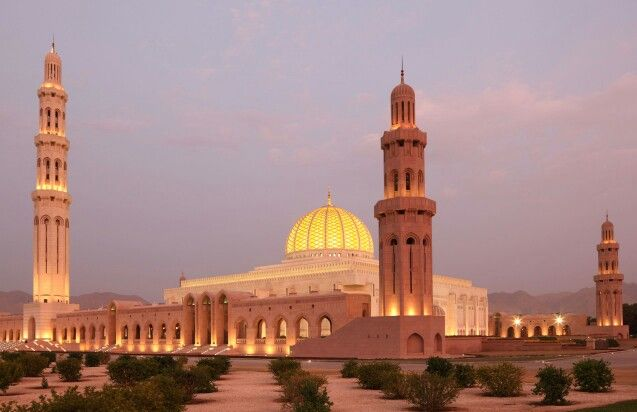
The mosque’s architecture is a blend of Omani, Islamic, and Middle Eastern influences. Its sandstone walls, marble flooring, and intricate carvings reflect both durability and elegance.
- The Central Dome: A defining feature of the mosque, rising 50 meters high, symbolizing the heavens and the connection between earth and sky.
- Minarets: The mosque has five minarets, representing the Five Pillars of Islam. The tallest, at 91.5 meters, dominates Muscat’s skyline, making the mosque visible from miles away.
- Courtyards and Archways: The open spaces are framed with gardens, archways, and traditional Omani mosaics, offering both spiritual calmness and architectural beauty.
The design balances solemnity with openness, creating a space where faith, history, and art converge.
Women’s Prayer Hall and Islamic Institute
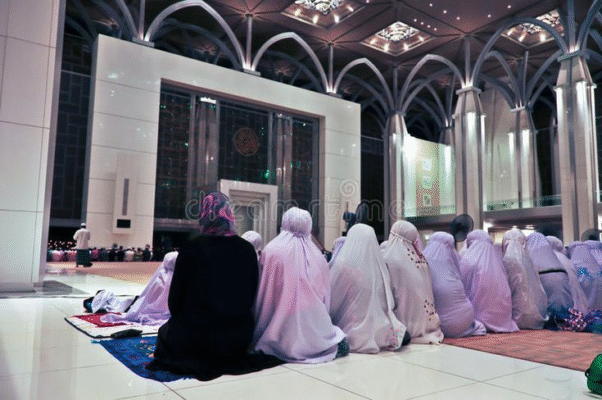
The mosque includes a dedicated women’s prayer hall, emphasizing inclusivity. Additionally, it houses an Islamic Institute and library with over 20,000 books, promoting knowledge, dialogue, and cultural exchange. This reflects Oman’s deep respect for education and its reputation as a nation of tolerance.
Symbol of Religious Harmony
Unlike many mosques worldwide, the Sultan Qaboos Grand Mosque is open to non-Muslim visitors (during designated visiting hours). This openness highlights Oman’s commitment to peaceful coexistence and mutual respect. Guests from across the globe are welcomed to admire the architecture, explore its library, and experience Islamic culture firsthand.
Guides at the mosque often emphasize Islam’s values of peace and compassion, allowing the mosque to serve as a bridge between faiths and cultures.
Surroundings and Landscape
The mosque is surrounded by carefully landscaped gardens, pathways, and fountains. The design of the exterior encourages visitors to reflect and find peace, even before entering the prayer halls. Palm trees and roses line the courtyards, complementing the grandeur of the sandstone structure.
At night, the mosque glows under soft illumination, turning it into a breathtaking landmark against Muscat’s skyline. Photographers often describe it as one of the most stunning night views in Oman.
A Legacy for Generations
Beyond its grandeur, the Sultan Qaboos Grand Mosque stands as a legacy of Sultan Qaboos bin Said, honoring his vision for a progressive yet deeply rooted Oman. It represents not just a house of worship but a cultural landmark that educates, inspires, and unites.
For Omani citizens, it is a proud symbol of their heritage. For pilgrims and visitors, it is a place of reflection, beauty, and spiritual awakening.
FAQs About Sultan Qaboos Grand Mosque
Q1: When was the Sultan Qaboos Grand Mosque built?
Construction began in 1994 and the mosque was officially inaugurated in 2001.
Q2: What is the capacity of the mosque?
It can accommodate over 20,000 worshippers, making it one of the largest mosques in the world.
Q3: Can non-Muslims visit the mosque?
Yes, non-Muslim visitors are welcome during specific visiting hours, provided they follow the dress code and respect the mosque’s guidelines.
Q4: What is special about the main prayer hall?
It features one of the world’s largest Persian carpets and a massive Swarovski crystal chandelier, both celebrated for their beauty and craftsmanship.