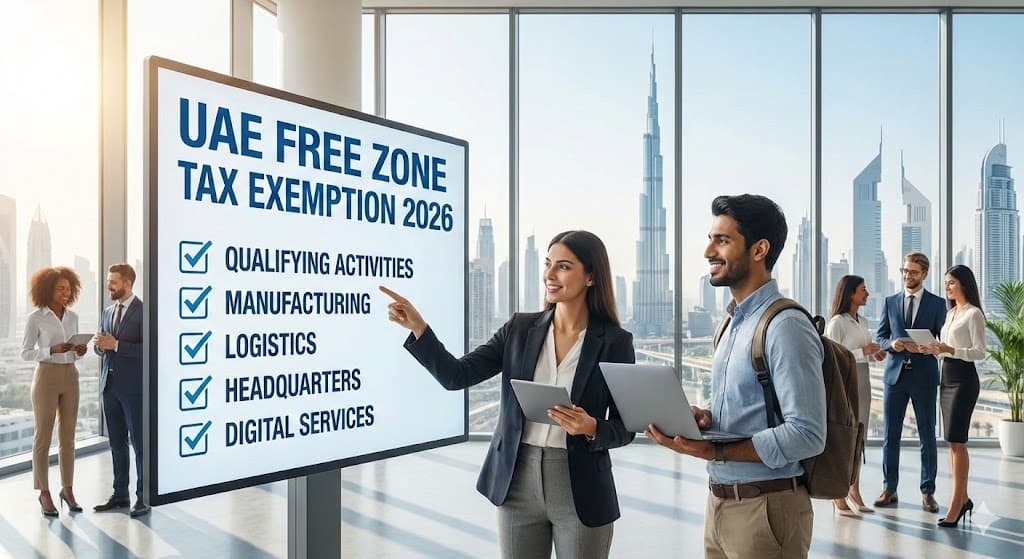
The UAE has built a reputation as one of the world’s most business-friendly destinations. With its modern infrastructure, global connectivity, and strong legal framework, it attracts entrepreneurs, investors, and travellers from every corner of the globe. One of its biggest advantages remains the free zone tax exemption, which continues into 2026 for businesses that meet specific conditions.
But here’s the important part:
Only certain activities qualify.
Whether you are planning to start a company, expand internationally, or explore business opportunities while travelling, understanding qualifying activities can make a major difference to your financial and strategic decisions.
This guide breaks everything down clearly — no legal jargon, no confusion.
What Is UAE Free Zone Tax Exemption?
UAE free zones are specially designated areas that offer businesses unique benefits, including full foreign ownership and simplified setup procedures. In 2026, eligible free zone companies can still enjoy a 0% corporate tax rate on income earned from approved qualifying activities.
This system is designed to reward businesses that contribute meaningfully to trade, industry, logistics, and global services.
Why Qualifying Activities Matter
Not every business activity in a free zone qualifies for tax exemption. Choosing the wrong activity — or mixing qualifying and non-qualifying income without proper planning — can lead to unexpected tax exposure.
Getting it right means:
-
Lower operating costs
-
Greater profit retention
-
Long-term business stability
-
Stronger international positioning
For travellers and digital entrepreneurs, it can also mean the freedom to work globally while staying compliant.
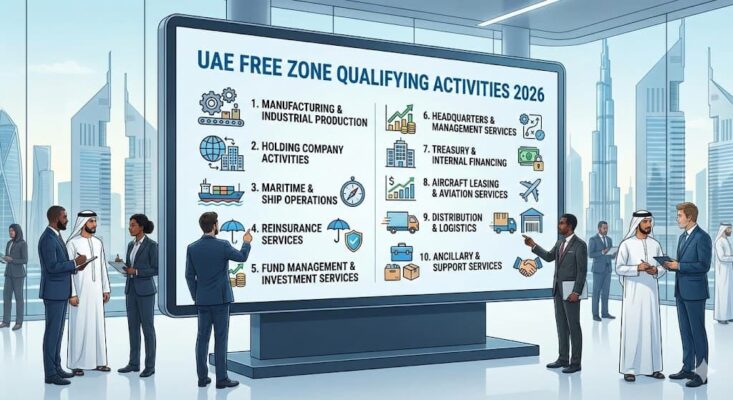
List of Qualifying Activities for UAE Free Zones in 2026
1. Manufacturing & Industrial Production
Businesses that produce, assemble, or process goods inside a free zone qualify. This includes light manufacturing, industrial processing, and value-added production activities.
2. Holding Company Activities
Companies established to hold shares or ownership interests in other businesses are considered qualifying. This structure is popular among international investors and corporate groups.
3. Maritime & Ship Operations
Ship ownership, management, leasing, and operation related to international transport fall under qualifying activities — reinforcing the UAE’s role as a maritime powerhouse.
4. Reinsurance Services
Providing insurance coverage to insurance companies (rather than individuals) qualifies and supports global risk-management networks.
5. Fund Management & Investment Services
Licensed fund management, asset administration, and investment services qualify when operated under approved regulatory frameworks.
6. Headquarters & Management Services
Companies offering strategic, administrative, or executive support to related businesses — such as planning, coordination, and oversight — qualify for exemption.
7. Treasury & Internal Financing
Managing cash flow, internal loans, and financial planning for group companies qualifies, making free zones attractive for multinational structures.
8. Aircraft Leasing & Aviation Services
Leasing and financing aircraft, engines, and aviation equipment qualify — aligning with the UAE’s global aviation leadership.
9. Distribution & Logistics
Warehousing, freight handling, distribution, and supply chain services operating from designated free zones are included under qualifying activities.
10. Ancillary & Support Services
Supporting activities like packaging, storage, maintenance, and installation may qualify if they directly support a primary qualifying activity.
Activities That Typically Do NOT Qualify
To avoid surprises, it’s important to know what usually falls outside exemption rules:
-
Direct consumer-facing services unrelated to qualifying categories
-
Most mainland business income
-
General banking and insurance (except reinsurance)
-
Certain real estate activities
-
Personal service income not linked to approved operations
Proper structuring is essential if a company earns both qualifying and non-qualifying income.
Why This Matters for Travellers & Digital Entrepreneurs
The UAE is more than a tourist destination — it’s a launchpad for global business.
For travellers, consultants, remote professionals, and startup founders, free zones offer:
-
Business setup without permanent residency requirements
-
Flexible company structures
-
Tax-efficient operations
-
Access to global markets
Many travellers combine exploration with opportunity, setting up companies while enjoying world-class infrastructure, safety, and connectivity.
Compliance Is Still Key
Tax exemption does not mean zero responsibility. To stay compliant, free zone companies must:
-
Maintain a real business presence
-
Keep proper financial records
-
Meet substance and operational requirements
-
Follow reporting and licensing rules
Compliance protects your exemption and your reputation.
What the Future Looks Like
The UAE’s free zone framework in 2026 reflects a forward-looking strategy focused on sustainability, innovation, and international business. Qualifying activities are aligned with sectors that support long-term economic growth.
For businesses and travellers alike, understanding these rules today creates smarter decisions tomorrow.
Final Thoughts
The UAE free zone tax exemption remains one of the most powerful incentives in the global business landscape. But the real advantage comes from choosing the right qualifying activity and planning correctly.
Whether you’re launching a company, expanding internationally, or exploring business opportunities while travelling, knowing what qualifies in 2026 puts you ahead of the curve.
With the right structure, the UAE free zone system offers more than tax benefits — it offers freedom, opportunity, and global reach.