
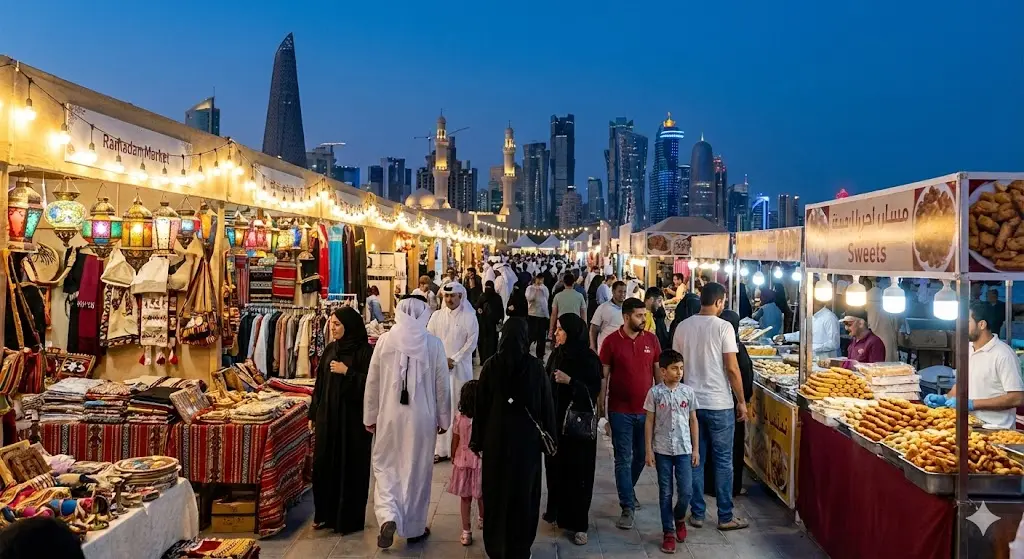
During Ramadan, Doha changes its rhythm. Days become quieter and more reflective, while nights bloom with warmth, movement, and connection. As families gather after sunset prayers and the city cools under the night sky, Ramadan night markets begin to glow—creating some of the most atmospheric and rewarding experiences for travelers visiting Qatar.
These markets are not ordinary shopping spaces. They are seasonal, community-driven environments where food, culture, and tradition come together in a way that feels deeply personal and welcoming. For visitors, Ramadan night markets offer a chance to witness Doha at its most authentic—unhurried, generous, and full of life.
Understanding Ramadan Night Markets in Doha
Ramadan night markets in Doha are temporary cultural spaces that operate exclusively during the holy month. They usually appear in open-air locations such as cultural districts, waterfronts, or public gathering areas. Their purpose goes beyond commerce—they serve as meeting points where people relax after fasting, socialize, and celebrate the spirit of Ramadan.
What makes these markets special is their timing and tone. Unlike daytime markets, they are designed for evening enjoyment, often starting after Iftar and continuing late into the night. Gentle lighting, ornate lanterns, and thoughtfully arranged seating turn these areas into warm and welcoming places to enjoy the night.
For travelers, these markets provide an immersive way to experience local life without needing prior cultural knowledge.
A Sensory Experience Under the Night Sky
The first thing visitors notice at a Ramadan night market is the atmosphere. Lights shimmer gently rather than brightly. Music is calm and traditional.The atmosphere is filled with the rich scents of spices, sizzling grilled dishes, and bread baked fresh on the spot.
Walking through the market feels like entering a story:
-
Families stroll together, children holding sweets
-
Friends sit and talk over tea
-
Vendors greet visitors warmly
-
Performers share cultural expressions quietly and respectfully
This balance of liveliness and serenity makes Ramadan night markets unique, especially compared to high-energy festivals or tourist attractions.
Food That Tells a Story
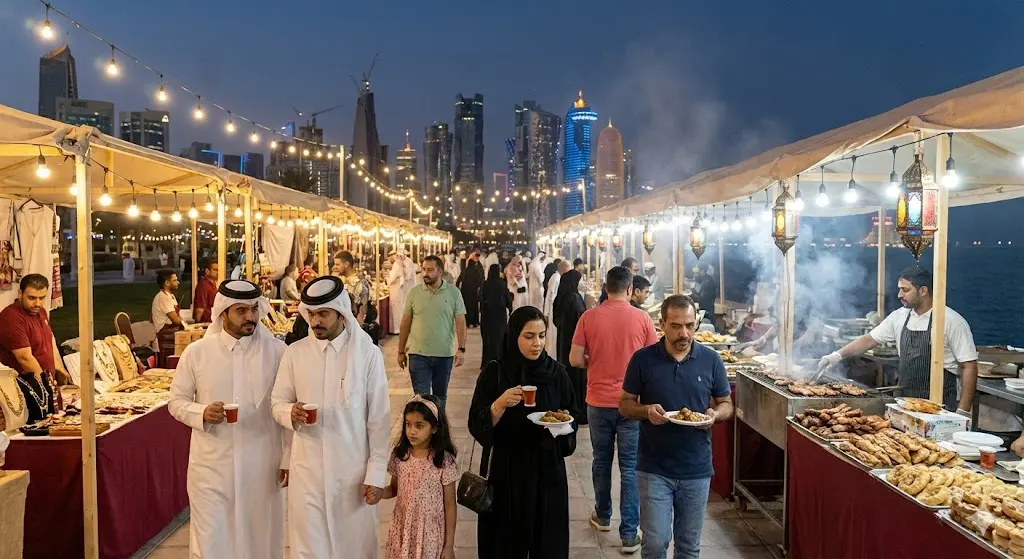
Food is central to the Ramadan experience, and night markets showcase this beautifully. Rather than rushed meals, the focus is on nourishment and sharing.
What Travelers Can Expect to Eat
Instead of overwhelming menus, vendors usually offer a few carefully prepared items:
-
Warm rice dishes meant for slow eating
-
Grilled meats cooked in front of guests
-
Savory pastries enjoyed late at night
-
Sweet treats made with dates, honey, or milk
Portions are often designed for sharing, making it easy to sample multiple flavors. For travelers unfamiliar with local cuisine, this format encourages curiosity without pressure.
Drinks and Comfort
Hydration is important after fasting, so refreshing drinks are always available:
-
Light fruit-based beverages
-
Warm tea for digestion
-
Traditional coffee served in small cups
Food prices are generally reasonable, making night markets accessible even for travelers on modest budgets.
Shopping With Meaning
Ramadan night markets are not focused on fast shopping. Instead, they emphasize meaningful purchases—items connected to culture, craftsmanship, and the season.
Visitors often find:
-
Handcrafted accessories
-
Traditional garments and scarves
-
Decorative lanterns and textiles
-
Locally inspired fragrances
-
Artistic pieces with cultural motifs
These items make excellent souvenirs because they reflect a moment in time. Buying something from a Ramadan night market feels more personal than purchasing from a standard mall.
Culture in Motion: Performances and Activities
Entertainment at Ramadan night markets is gentle and thoughtful. Rather than loud shows, performances are designed to reflect tradition and community values.
You may encounter:
-
Traditional music played live
-
Cultural demonstrations
-
Storytelling sessions
-
Artistic workshops
-
Children’s activities inspired by Ramadan themes
For travelers, these moments provide insight into how culture is shared across generations.
Why Travelers Find These Markets So Rewarding
Ramadan night markets appeal to travelers because they offer something rare: belonging without expectation. Visitors are not required to fast or follow religious practices to participate respectfully. Simply observing, engaging politely, and enjoying the evening is enough.
Travelers benefit by:
-
Experiencing Doha beyond modern attractions
-
Learning through observation rather than instruction
-
Feeling welcomed rather than guided
-
Creating memories rooted in real life
These markets show Doha as a lived city—not just a destination.
Practical Advice for Visitors
To fully enjoy Ramadan night markets in Doha, consider these tips:
-
Visit after sunset when the atmosphere is at its peak
-
Dress modestly to show respect for the holy month
-
Walk slowly and observe—the experience is about ambiance
-
Ask before taking photos, especially of people
-
Try something unfamiliar—vendors are usually happy to explain
A relaxed mindset is the key to enjoying these markets.
More Than an Evening Out
For many travelers, a visit to a Ramadan night market becomes one of the most memorable experiences of their trip. It’s not just about what you eat or buy—it’s about how the evening feels.
The quiet joy, the shared space, the sense of time slowing down—these elements leave a lasting impression.
Ramadan night markets reveal a softer side of Doha, one that values togetherness, hospitality, and reflection.
Final Reflection
If you find yourself in Doha during Ramadan, do not limit your experience to daytime sightseeing. Step into the night. Follow the lights and the calm hum of conversation. Let the markets guide you.
Ramadan night markets are where Doha shows its soul—gently, generously, and without spectacle. For travelers seeking meaningful experiences rather than checklists, these markets offer something truly special.
In a world of fast travel, they invite you to pause—and that alone makes them unforgettable.