
A Deep Dive into the Decision, Its Impact, and What Comes Next
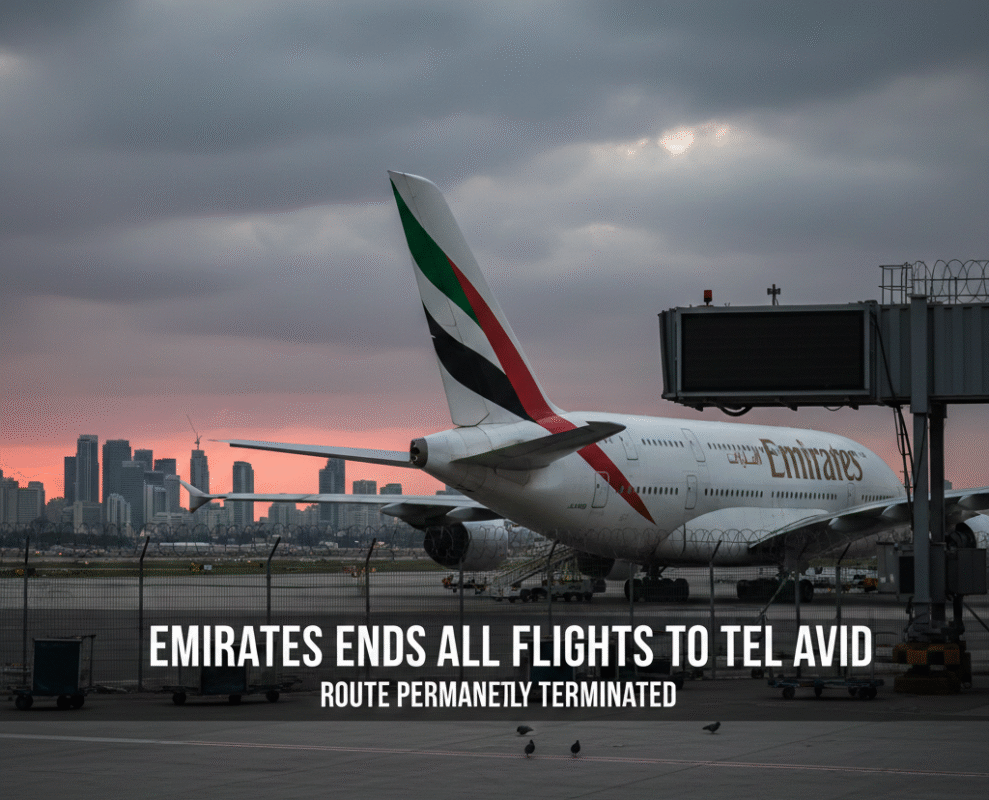
The global aviation industry is no stranger to disruption, but the recent announcement that Emirates Airlines has terminated all flights to Tel Aviv marks a particularly significant moment. This is not a temporary suspension or a short-term operational adjustment — it is a full and formal withdrawal from a route that once symbolized expanding regional connectivity between the United Arab Emirates and Israel.
This article explores why Emirates took this step, how it affects travelers, its broader implications for the airline industry, and what the future might hold. With rising geopolitical tensions and a rapidly shifting global landscape, the decision serves as a reminder of how closely international aviation is tied to world affairs.
Why Emirates Chose to Terminate Its Tel Aviv Flights
-
Escalating Security Risks
The Middle East has recently experienced rising instability, heightening concerns around air safety and conflict-zone travel. Operating flights to or near regions where tension is high poses potential risks that no global carrier can afford to ignore. Airlines rely heavily on real-time assessments from security agencies, international regulators, and risk consultants, and when risk levels rise beyond acceptable thresholds, flight termination becomes a rational and necessary response.
As tensions increased, maintaining the Dubai–Tel Aviv route became increasingly challenging from both a safety and an operational standpoint. Emirates, known for its strict safety protocols, opted to prioritize the welfare of its passengers, crew, and assets.
-
Airspace and Routing Challenges
When geopolitical conditions change, airspace availability can shift rapidly. Airlines sometimes face sudden closures of flight corridors, forcing them to choose significantly longer, less efficient, and more costly routes. These reroutes not only increase fuel consumption but also extend travel times and strain crew scheduling regulations.
Over time, if such irregularities become consistent, the cost-benefit balance of operating a route can become unsustainable. Emirates likely evaluated these pressures and concluded that the route no longer aligned with its operational efficiency goals.
-
Rising Insurance and Liability Concerns
Aviation insurance plays a major role in determining where airlines choose to operate. Flying into regions classified as high-risk or unstable leads to sharply increased insurance premiums, including war-risk surcharges. If the liability exposure becomes disproportionate to the revenue generated on the route, airlines may choose to withdraw entirely.
For Emirates, terminating flights to Tel Aviv appears to be a strategic decision to minimize long-term financial and legal exposure.
-
Strategic Reallocation of Aircraft
Every aircraft in Emirates’ fleet is a high-value asset, and the airline is constantly evaluating where each plane can generate the most value. By discontinuing the Tel Aviv service, Emirates can redeploy aircraft to routes with stronger demand, more stability, and greater profitability — particularly within Europe, Asia, and the Americas.
This type of route optimization is central to Emirates’ global strategy and ensures the airline remains competitive in a crowded and evolving market.
-
Geopolitical Sensitivity and Diplomatic Balancing
Although airlines are commercial entities, their choices often reflect national considerations. Emirates, as the flagship carrier of Dubai and a key part of the UAE’s international identity, may also be responding to wider regional dynamics and diplomatic signals.
While the UAE has maintained diplomatic relations with Israel since the Abraham Accords, shifting regional conditions have influenced business, trade, and travel patterns. Emirates’ decision aligns with a broader trend of airlines reassessing their involvement in politically sensitive destinations.
How the Decision Affects Travelers
-
Passengers With Existing Bookings
Travelers booked on Emirates flights to or from Tel Aviv will need to seek alternative arrangements. The airline has assured customers that they will have access to options such as:
- Full refunds
- Rebooking on different dates
- Rerouting through available alternative carriers
Passengers are encouraged to contact Emirates’ customer service or their travel agent promptly to manage changes smoothly.
-
Limited Connectivity Options
With Emirates withdrawing its service, connectivity between the UAE and Israel becomes more limited. While some airlines continue to operate on this route, schedules have become unpredictable due to fluctuating regional conditions. Travelers may find fewer flight options, higher fares, and increased layover times.
-
Increased Need for Travel Flexibility
This situation emphasizes the importance of travel insurance and flexible booking policies. Geopolitical volatility can lead to sudden cancellations, rerouting, or airport closures. Travelers to any region experiencing heightened tension should consider refundable fares, flexible accommodation plans, and insurance policies that specifically cover political or conflict-related disruptions.
Impact on the Global Aviation Industry
-
Shift in Middle East Travel Patterns
Emirates’ withdrawal highlights a larger trend: airlines worldwide are reassessing how geopolitical stability influences network planning. Major carriers have already altered or canceled routes across the Middle East due to uncertainty, leading to reduced connectivity and altered travel flows.
-
Financial Considerations for Airlines
While pulling out of a route comes with short-term revenue loss, maintaining service in a high-risk area can be far more costly. Airlines must weigh fuel costs, crew logistics, risk premiums, and legal obligations. Emirates’ decision demonstrates a long-term view of financial sustainability over maintaining route presence.
-
Potential Domino Effect
When a major global carrier ends a route, smaller airlines often follow suit. Emirates’ move may encourage other airlines to reassess their operations in the region, especially if tensions escalate or insurance liabilities increase.
-
Changing Regional Diplomacy and Travel Demand
Political changes often influence travel demand. If travelers perceive Israel as a high-risk destination, tourism and business travel numbers could decline, further impacting airline decisions.
Looking Ahead: What the Future Holds
The situation remains fluid, and future developments will depend on regional stability, diplomatic relations, and aviation safety assessments. Emirates may revisit its decision if conditions improve, but for now, the termination appears permanent.
Travelers and industry observers should watch for updates from:
- Emirates’ operational announcements
- Government travel advisories
- Insurance and risk assessment firms
- Regional diplomatic developments
Until stability returns, many airlines may continue to adjust their presence in the region.
References
- Emirates permanently ends Tel Aviv flights — Yahoo News:
https://www.yahoo.com/news/articles/emirates-permanently-ends-tel-aviv-173009766.html - Emirates suspends operations to Israel — Gulf News:
https://gulfnews.com/business/aviation/dubai-airline-emirates-suspends-operations-to-israel-until-further-notice-1.1700659570469 - Etihad resumes Israel flights while Emirates suspends — Gulf News:
https://gulfnews.com/business/aviation/uaes-etihad-resumes-israel-flights-emirates-suspends-all-tel-aviv-flights-until-october-20-1.1696997020113