
The Hidden Mountain Village of Oman’s Hajar Range
Tucked deep within the folds of the Hajar Mountains, far from the bustle of cities and highways, lies one of Oman’s most picturesque and timeless villages — Bilad Sayt. Surrounded by towering peaks, palm groves, and terraced farms that cling to the mountainsides, this hidden settlement feels like a scene from another era.
Reaching Bilad Sayt is an adventure in itself — accessible only by 4×4 vehicle through winding mountain tracks — but the journey rewards travelers with some of the most breathtaking scenery and cultural authenticity in all of Oman.
A Village Frozen in Time
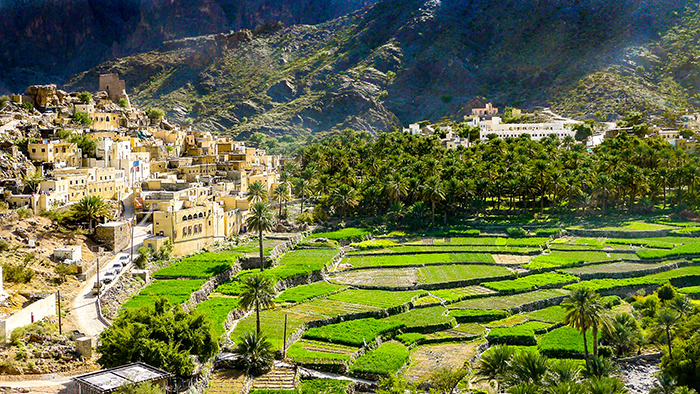
Bilad Sayt (sometimes spelled Bilad Sayh) is often described as Oman’s most beautiful village, and it’s not hard to see why. Nestled in a small bowl-shaped valley surrounded by rocky cliffs, it offers a perfect contrast between rugged mountain terrain and the lush green of cultivated terraces.
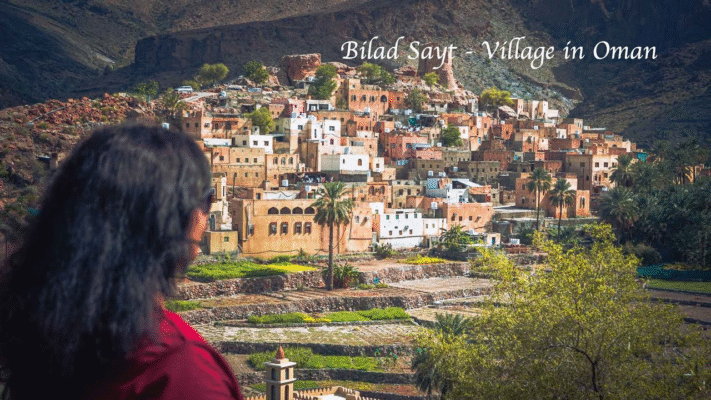
The village’s architecture reflects traditional Omani style — mud-brick houses and stone walls built close together for shade and protection. Narrow pathways wind between the homes, leading to small courtyards, water channels, and shaded gardens. Life here moves at a slow pace, just as it has for centuries.
Standing on a nearby ridge, you can see how the village is almost hidden from view, perfectly blending into the natural colors of the landscape. It’s a place that embodies the harmony between people and the mountains — a relationship based on respect, patience, and resilience.
The Heart of the Hajar Mountains
Bilad Sayt sits at the crossroads of Oman’s most spectacular mountain regions. To its north rises Jebel Shams, the country’s highest peak, while to the east sprawls the mighty Jebel Akhdar range. The village itself is surrounded by steep canyons, wadi systems, and cliffs that create both isolation and beauty.
Terraced farms cascade down the slopes around the village, forming green steps that glow vividly against the brown rock. These terraces are irrigated by an ancient falaj system, which channels water from nearby springs to the date palms, fruit trees, and crops that sustain the community. The use of these traditional irrigation channels is a UNESCO-recognized heritage practice and remains vital to life in the mountains.
During spring and winter, the terraces bloom with bright green crops and colorful flowers. In contrast, the surrounding cliffs shift in tone throughout the day, from orange to grey to deep brown, depending on the light — a living canvas of nature’s artistry.
The Journey to Bilad Sayt
Reaching Bilad Sayt is an experience as memorable as the village itself. The most common route begins from Al Hamra, taking travelers on a winding path through Wadi Bani Awf, one of the most dramatic wadis in Oman. This journey is only possible by 4WD, as the road crosses steep inclines, gravel sections, and narrow passes carved between towering cliffs.
Along the way, you’ll pass through natural wonders such as the Snake Gorge (Wadi Bimah), famous for its twisting rock formations and pools. The drive offers countless moments where you’ll want to stop, take photos, and simply admire the scale of the landscape.
The final approach to Bilad Sayt is nothing short of breathtaking. As you round the last corner of the mountain road, the valley suddenly opens up, revealing the village like a hidden jewel — a cluster of homes surrounded by terraces and palms, with the mountains standing guard in every direction.
It’s one of those moments that make the long, dusty drive completely worth it.
A Living Example of Omani Heritage
What makes Bilad Sayt so special is not just its beauty, but its authentic way of life. The people here live much as their ancestors did, relying on agriculture, livestock, and small-scale trade. The air is fresh and clean, and the sense of peace is profound.
Visitors are always greeted with the quiet warmth characteristic of rural Oman. While there are no restaurants or hotels in the village itself, travelers often stay in guesthouses or mountain lodges in nearby towns such as Balad Seet, Al Hamra, or Misfat Al Abriyeen, making day trips into the valley.
Walking through the narrow alleys, you can hear the sound of running water from the falaj, the call of roosters, and the laughter of children playing. Every part of the village tells a story — from the carefully maintained terraces to the handmade stone walls that protect the crops from erosion.
It’s a rare opportunity to witness a lifestyle that remains almost untouched by modernity.
When to Visit
The best time to visit Bilad Sayt is between October and April, when the mountain air is cool and the terraces are green. Summer months can be hot and dry, though temperatures are generally lower than in the coastal plains.
Because the journey involves mountain driving, it’s best to travel during daylight and avoid rainy days when wadis may flood. Always check road conditions and bring plenty of water, as services in the area are limited.
What to Bring
Since facilities in and around Bilad Sayt are minimal, visitors should come prepared with:
- Drinking water and light snacks
- A full tank of fuel (fill up in Al Hamra or Rustaq before entering the mountains)
- A 4WD vehiclein good condition
- Camera or drone (where permitted) for photography
- Comfortable walking shoes for exploring the village and terraces
If you plan to camp nearby, bring your own gear and ensure you leave no trace — preserving the pristine environment is vital to maintaining the beauty of this unique location.
Why Bilad Sayt Captures Oman’s Spirit
Bilad Sayt isn’t just another scenic stop; it represents the soul of Oman — quiet strength, deep tradition, and a profound connection to the land. It is a living example of how communities have adapted to the country’s challenging landscapes, turning rocky slopes into fertile ground and isolation into self-sufficiency.
For travelers, it offers something rare: a glimpse of authenticity in a world that’s rapidly changing. It’s a place where you can slow down, listen to the wind echo through the mountains, and feel a sense of peace that only untouched nature can provide.
A Journey Worth Every Turn
Visiting Bilad Sayt requires effort — a challenging road, a long drive, and a bit of planning — but that’s what makes it so rewarding. It’s not a tourist attraction in the conventional sense, but a genuine encounter with Oman’s mountain heritage.
Standing on the ridge overlooking the village at sunset, as the last light fades over the terraced fields and the stone houses glow softly against the cliffs, you understand why Bilad Sayt leaves such a lasting impression. It’s more than a destination; it’s a reminder of the beauty that thrives in simplicity, resilience, and harmony with nature.