
Oman’s Hidden Village Carved into Stone
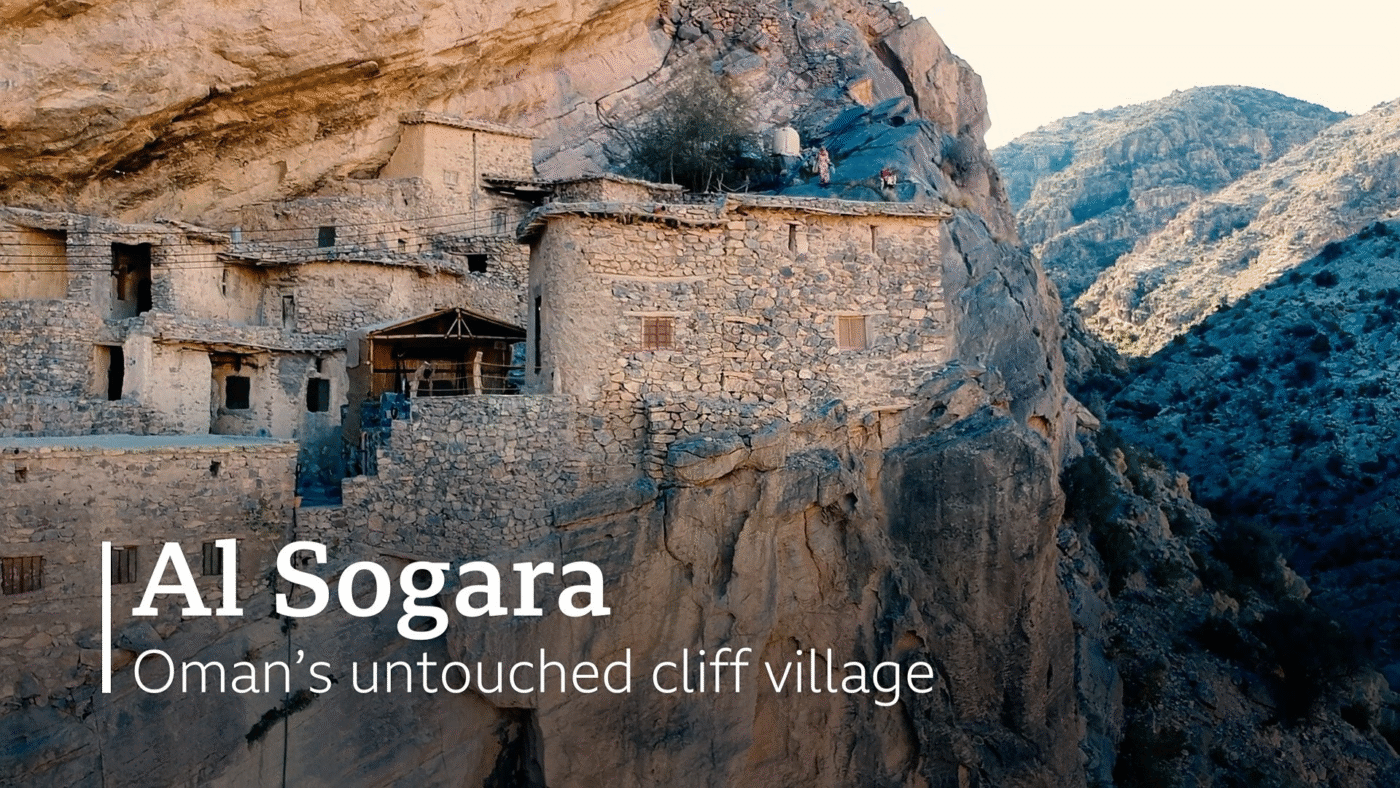
High above the clouds, where the air thins and silence hangs heavy among the cliffs, there lies a place that few have ever seen — a mountain village seemingly carved by nature itself. This is Al Sogara, a tiny, remote settlement tucked deep into the heart of Jebel Akhdar, in Oman’s Ad Dakhiliyah region. Its rugged beauty, fascinating history, and isolation make it one of the most remarkable destinations in the Sultanate — a hidden world that feels suspended in time.
A Village Hidden in the Mountains
Al Sogara is not a place you stumble upon by chance. The road leading up to it is steep and narrow, requiring a 4×4 to navigate safely. The journey tests both patience and courage, winding through the dramatic landscape of the Hajar Mountains, where cliffs plunge sharply and the land seems almost sculpted by the wind.
For those who dare to make the trip, the reward is a sight that seems almost unreal. Al Sogara appears to emerge from the mountain itself — houses built directly into rock faces, walls blending seamlessly with the cliffs, and pathways that weave through stone and shadow. It is as if the village has been hiding in plain sight, protected by the very mountain that holds it.
The Story Behind the Stones
Generations ago, long before modern roads and cars reached this region, families made their homes in the caves and rocky slopes of Jebel Akhdar. Al Sogara’s early inhabitants chose this location for a reason: safety, isolation, and sustainability. The thick rock walls offered protection from the harsh summer heat and the biting winter cold, while the cliffs provided a natural defense against invaders or wild animals.
Water, the lifeline of any mountain settlement, flowed through the ancient falaj irrigation systems — channels carved with precision to direct mountain springs into small terraced farms. To this day, these falaj systems are a symbol of Oman’s ingenuity, reflecting centuries of understanding and respect for the land.
Inside the homes, simplicity reigns. Rooms are cool and dark, built from local stone and wood. Windows are small, not for decoration, but for practicality — to keep the mountain air from turning too cold at night. Life here follows a rhythm set by nature: sunrise brings work in the fields and care for animals, while evenings bring quiet gatherings under the stars.
The Journey to Reach Al Sogara
Reaching Al Sogara is a journey that requires both preparation and determination. The road to Jebel Akhdar itself is a steep climb, restricted to four-wheel-drive vehicles due to the sharp inclines and unpaved tracks that snake around the mountains. From the base near Birkat Al Mouz, the route winds upward through breathtaking views of gorges, terraced farms, and rocky plateaus.
Once inside the mountain plateau, the scenery changes dramatically — the green terraces that give Jebel Akhdar its name (“The Green Mountain”) contrast sharply against the grey stone ridges. And then, somewhere along these winding paths, hidden behind a curtain of cliffs, you arrive at Al Sogara.
Standing there, it’s easy to feel a sense of reverence. The village seems timeless — quiet, proud, and mysterious. It is not a place of crowds or souvenir shops; it is a living memory of Oman’s ancient way of life.
Life in the Rock
The people of Al Sogara live with a closeness to nature that most of the modern world has long forgotten. The air is crisp, the sounds of traffic are replaced by the distant bleating of goats, and the daily routine follows the rise and fall of the sun.
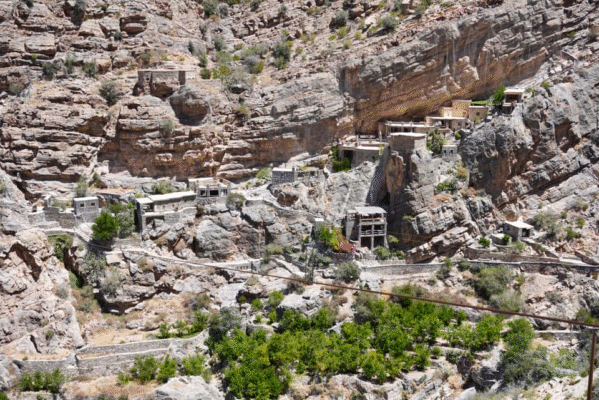
Many of the families here trace their roots back centuries. Their ancestors built the village not just as a home, but as a refuge. The stone structures blend almost invisibly into the cliffs, making the village nearly impossible to spot from a distance. For travelers, this adds a layer of mystery — one moment the mountains appear barren and silent, and the next, you notice doorways and windows carved into stone, revealing life where you least expect it.
Modern amenities have slowly reached Al Sogara in recent years. Electricity, limited internet access, and improved roads have started to connect the village to the rest of Oman. Yet, even with these changes, the heart of Al Sogara remains untouched. The traditions, language, and community spirit continue to thrive much as they did generations ago.
The Allure of Isolation
There’s something almost poetic about a place like Al Sogara. It stands as a reminder of how humans once lived in harmony with the land — not by conquering it, but by adapting to it. Every stone in the village has a story, every pathway a purpose.
Travelers who come here often describe it as a journey into another era. The isolation isn’t just physical; it’s emotional. Away from the noise of cities, one can hear the whisper of the wind echo through the cliffs. The silence feels sacred, the landscape humbling.
The people of Al Sogara, too, seem shaped by this environment — resilient, warm, and deeply connected to their home. Visitors are often welcomed with quiet hospitality, a cup of coffee brewed the traditional Omani way, and stories of mountain life passed down through generations.
A Glimpse of the Past, a Step into the Future
Al Sogara is more than just a destination. It is a living museum of Omani heritage — a place where the past still breathes in the rhythm of daily life. Yet, it’s not stuck in time. Younger generations are finding ways to preserve their identity while opening their doors to visitors curious about this hidden gem.
Some families have started offering guided visits or homestays, allowing travelers to experience mountain life firsthand. These efforts bring much-needed income to the area while ensuring that the traditions and landscapes remain respected.
As Oman continues to promote sustainable and cultural tourism, places like Al Sogara are gaining recognition not as mere attractions, but as vital parts of the nation’s story — symbols of endurance, community, and the deep connection between people and the land.
Why Al Sogara Matters
In a world where modernity often overshadows tradition, Al Sogara stands quietly as a reminder of balance. It shows that progress and preservation can coexist, that even in the remotest corners, beauty thrives when nurtured with respect.
Visiting Al Sogara is not about ticking off a destination on a list; it’s about experiencing authenticity — the kind that humbles you, moves you, and stays with you long after you’ve left.
As the sun sets behind Jebel Akhdar, casting golden light over the stone homes of Al Sogara, you can’t help but feel that you’ve witnessed something rare — a piece of Oman’s soul, carved not just into rock, but into the heart of anyone who visits.