A Living Legacy of Old Dubai
Nestled along the banks of the Dubai Creek in the Al Fahidi District of Bur Dubai, the Al Fahidi Historical Neighborhood —formerly known as Al Bastakiya—is one of the most enchanting heritage areas in the United Arab Emirates. This remarkable neighborhood dates back to the late 19th century and stands as a timeless reminder of Dubai’s humble beginnings long before its transformation into a global metropolis. It is one of the few remaining areas in the city where visitors can truly experience the spirit of old Dubai, complete with its distinctive architecture, cultural vibrancy, and traditional way of life. Today, Al Fahidi serves as a bridge between the city’s rich past and its dynamic present, making it a must-visit destination for history enthusiasts, art lovers, and cultural explorers alike.
A Window into Dubai’s Past
The Al Fahidi Historical Neighborhood holds immense cultural and historical significance. Built by Persian merchants who settled in Dubai in the late 1800s, the area was once a thriving residential quarter that reflected the city’s early trading roots and close ties with Iran and the wider Arabian Gulf. Over time, it became a melting pot of cultures and ideas, shaping the foundation of Dubai’s cosmopolitan identity. Today, walking through Al Fahidi is like stepping back in time. The neighborhood has been carefully restored to preserve its original charm, offering visitors a rare opportunity to experience the architectural and social fabric of Dubai before the oil era.
Traditional Wind-Tower Houses and Timeless Architecture
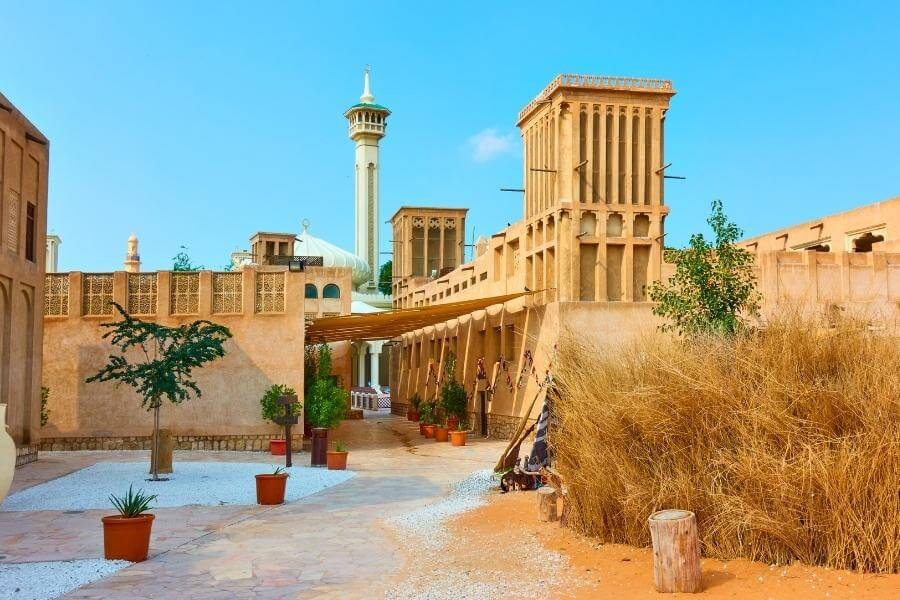
One of the most captivating features of Al Fahidi is its traditional wind-tower houses, known locally as barjeel. These iconic structures were designed to capture and channel cool breezes into the interior spaces, providing natural ventilation long before the advent of air conditioning. The houses, constructed from materials such as coral, gypsum, limestone, and sandalwood, showcase an ingenious adaptation to the desert climate. Their thick walls help regulate temperature, while open courtyards provide light, air, and communal gathering spaces for families.
The architectural style throughout the neighborhood reflects a harmonious blend of Persian, Emirati, and Arabian Gulf influences. Simple yet elegant, the sand-coloured walls and wooden doors evoke a sense of warmth and authenticity. The restoration of these buildings has preserved not only their physical form but also the stories and traditions that have been passed down through generations.
The Charm of Narrow Lanes
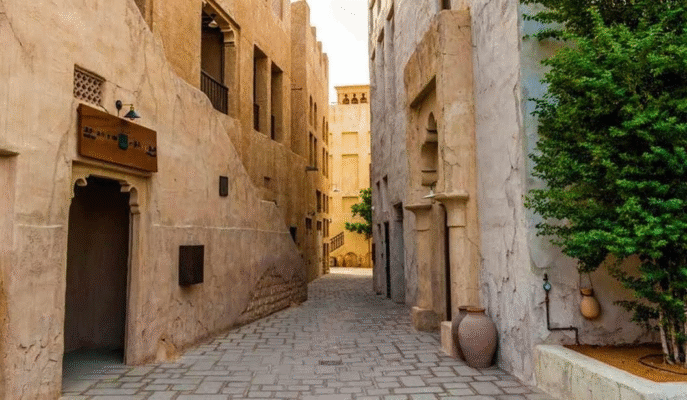
Perhaps the most captivating aspect of Al Fahidi is its network of narrow, winding lanes. These shaded alleys were deliberately designed to protect residents from the harsh sun and to encourage a close-knit community atmosphere. As visitors wander through these labyrinthine passages, they are transported to a bygone era—where neighbours greeted one another in the streets, children played in the courtyards, and merchants traded goods from across the seas.
The intimate scale of the lanes and their organic layout create a peaceful, almost meditative ambiance. The play of light and shadow across the adobe walls, the gentle hum of conversations drifting from cafés, and the occasional scent of Arabic coffee or incense in the air combine to create an atmosphere that feels both nostalgic and alive.
Art, Culture, and Creativity
Beyond its historical appeal, Al Fahidi has evolved into a vibrant hub for art and culture. Many of the restored houses now serve as art galleries, museums, cultural centres, and cafés that promote local creativity and dialogue. Institutions such as the Sheikh Mohammed Centre for Cultural Understanding (SMCCU) offer guided tours, traditional Emirati meals, and interactive sessions that help visitors gain a deeper appreciation of Emirati customs and traditions.
Art lovers can explore galleries like the XVA Art Hotel & Gallery, which showcases contemporary art from the Middle East, or visit the Coffee Museum, where one can learn about the cultural significance of coffee in the region’s history. The neighborhood also hosts cultural events and art festivals throughout the year, transforming its quiet alleys into lively stages for performances, exhibitions, and community gatherings. These initiatives have turned Al Fahidi into a living museum—one that not only preserves the past but also inspires the future.
Nearby Attractions
The Al Fahidi Historical Neighborhood enjoys a prime location in Bur Dubai, surrounded by several other iconic attractions. Just a short walk away is the Dubai Museum, located in the historic Al Fahidi Fort—the oldest existing building in the city. The museum offers fascinating exhibits that trace Dubai’s transformation from a small fishing village to a global metropolis.
Across the creek lies the Textile Souk, a colourful market where visitors can browse an array of silks, cottons, and embroidered fabrics, reflecting the trading heritage that once defined Dubai’s economy. Nearby, the Dubai Creek itself is a sight to behold. Traditional abras (wooden boats) continue to ferry passengers across the water, offering a scenic and affordable way to experience the city’s old trading routes. Together, these attractions paint a vivid picture of Dubai’s cultural and economic evolution.
Accessibility and Visitor Information
The Al Fahidi Historical Neighborhood is easily accessible from anywhere in Dubai. Visitors can reach it by taxi, car, or the Dubai Metro, with the Al Fahidi and BurJuman stations located within walking distance. For those seeking a more traditional approach, crossing Dubai Creek on an abra from Deira to Bur Dubai is an experience in itself.
Entry to the neighborhood is free of charge, allowing visitors to wander its lanes and explore its attractions at their own pace. Some museums and galleries may charge a small entry fee, but the overall experience is affordable and welcoming to all. The best time to visit is during the cooler months, from November to March, when outdoor exploration is most enjoyable.
Preserving the Soul of Old Dubai
In a city renowned for its futuristic architecture and rapid modernization, the preservation of Al Fahidi Historical Neighborhood is of immense cultural importance. It serves as a reminder of Dubai’s origins—a city built on trade, tolerance, and human connection. As glass towers and megaprojects redefine the skyline, places like Al Fahidi ensure that the spirit of old Dubai continues to thrive.
The neighborhood stands not just as a tourist attraction, but as a symbol of continuity—linking the city’s proud heritage with its ambitious future. Through careful restoration and cultural engagement, Al Fahidi reminds both residents and visitors that progress and tradition can coexist harmoniously. By protecting such sites, Dubai safeguards its identity and ensures that the stories of its ancestors remain alive for generations to come.
Al Fahidi Historical Neighborhood is more than just a place; it is a living story—a reflection of the resilience, creativity, and cultural richness that define Dubai’s remarkable journey from desert settlement to world city.